Illuminating the Art of Atmosphere
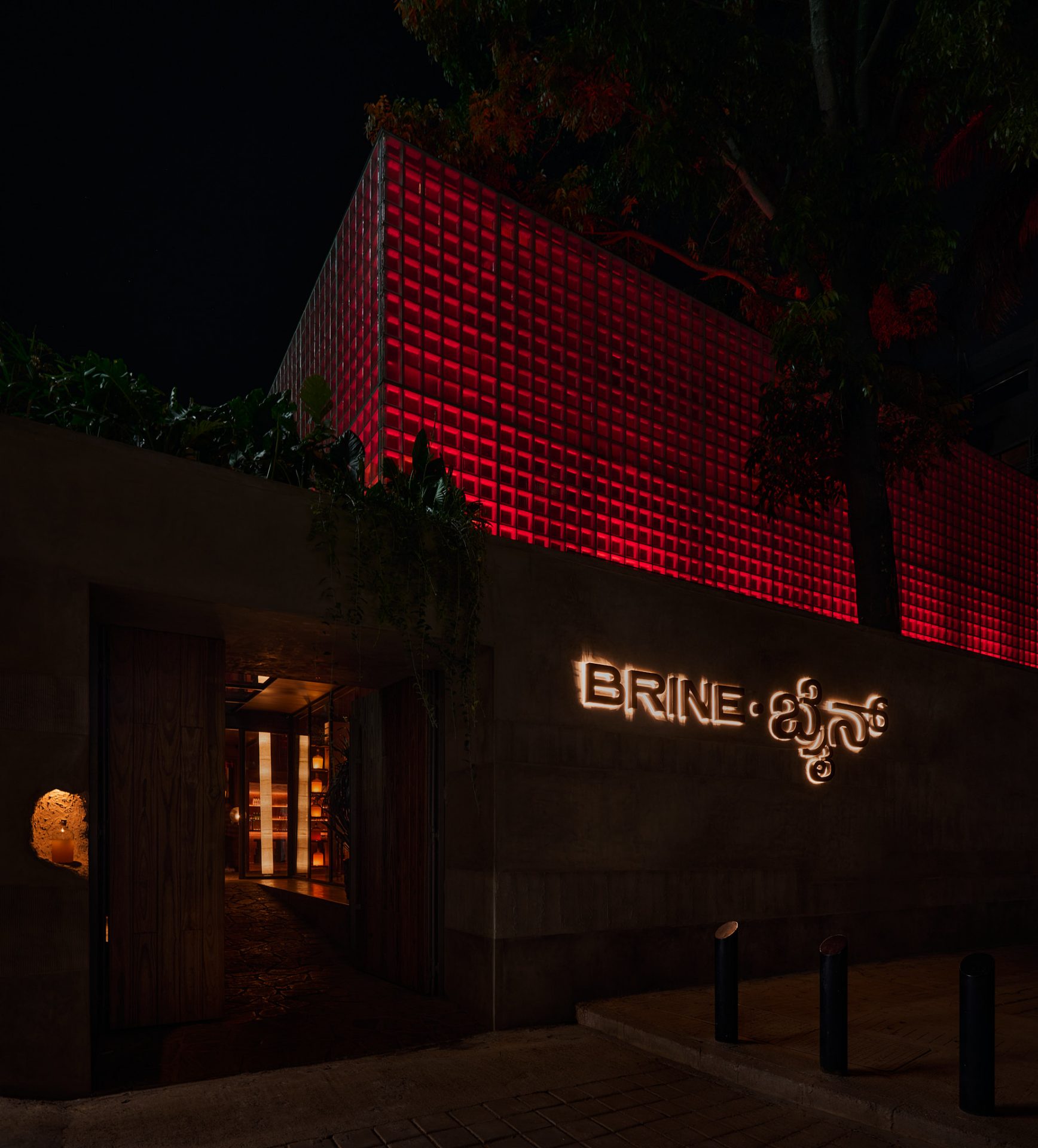
The brief began with the architecture. George Seemon of STAPATI designed a steel-and-glass volume onto a residential footprint, a material language rarely seen in Bengaluru, and one that reads as genuinely radical for the area. The glass-brick volume behaves differently across the day: in daylight, its partial translucency lets it recede into the streetscape. At night, the intent reverses entirely. We wanted the building to become an invitation, not a curiosity, something people see and are drawn toward, rather than something they merely notice and wonder about.
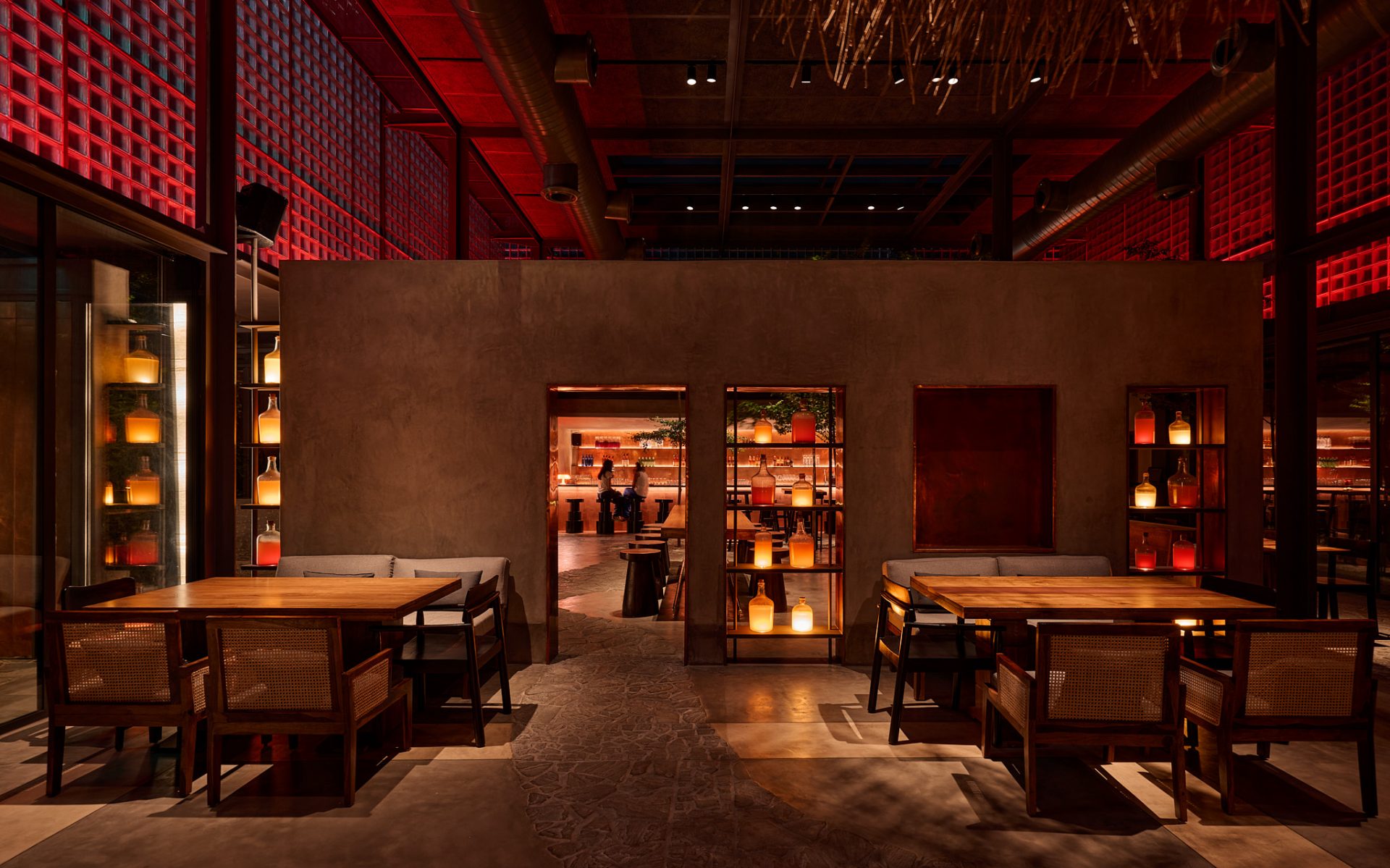
Making that happen meant making the glass itself glow, which isn’t straightforward, glass doesn’t naturally hold or catch light. After testing several options, transparent, lightly textured, more heavily textured, and translucent, together with the architect, we chose a glass with just enough texture to scatter light without making the facade visually busy. A line of linear grazers mounted on the inside washes light across the glass bricks, so from the street the glow reads as continuous and ambient rather than as a row of visible fixtures. Several studies and mock-ups went into this, not just to illuminate the glass brick itself, but to find the right hierarchy of light within it: the right balance of highlight and shadow, so the facade had depth rather than a flat, even glow. The harder discipline was containing that same light, keeping it confined to the facade plane, with no spill into the human-scaled ambience inside.