Licht Kunst Licht AG
Masterplans & Public Spaces

Doshi Retreat, Vitra Campus

Weil am Rhein
Client
Vitra Campus, Weil am Rhein
Architects
Balkrishna Vithaldas Doshi / Studio Sangath, Ahmedabad (Khushnu Panthaki Hoof and Sönke Hoof)
Completion
2025
Photos
Dejan Jovanovic (1), Licht Kunst Licht AG (2), Julien Lanoo (3 - 7), Daisuke Hirabayashi (7) (Vitra)

Light for Contemplation – The Doshi Retreat

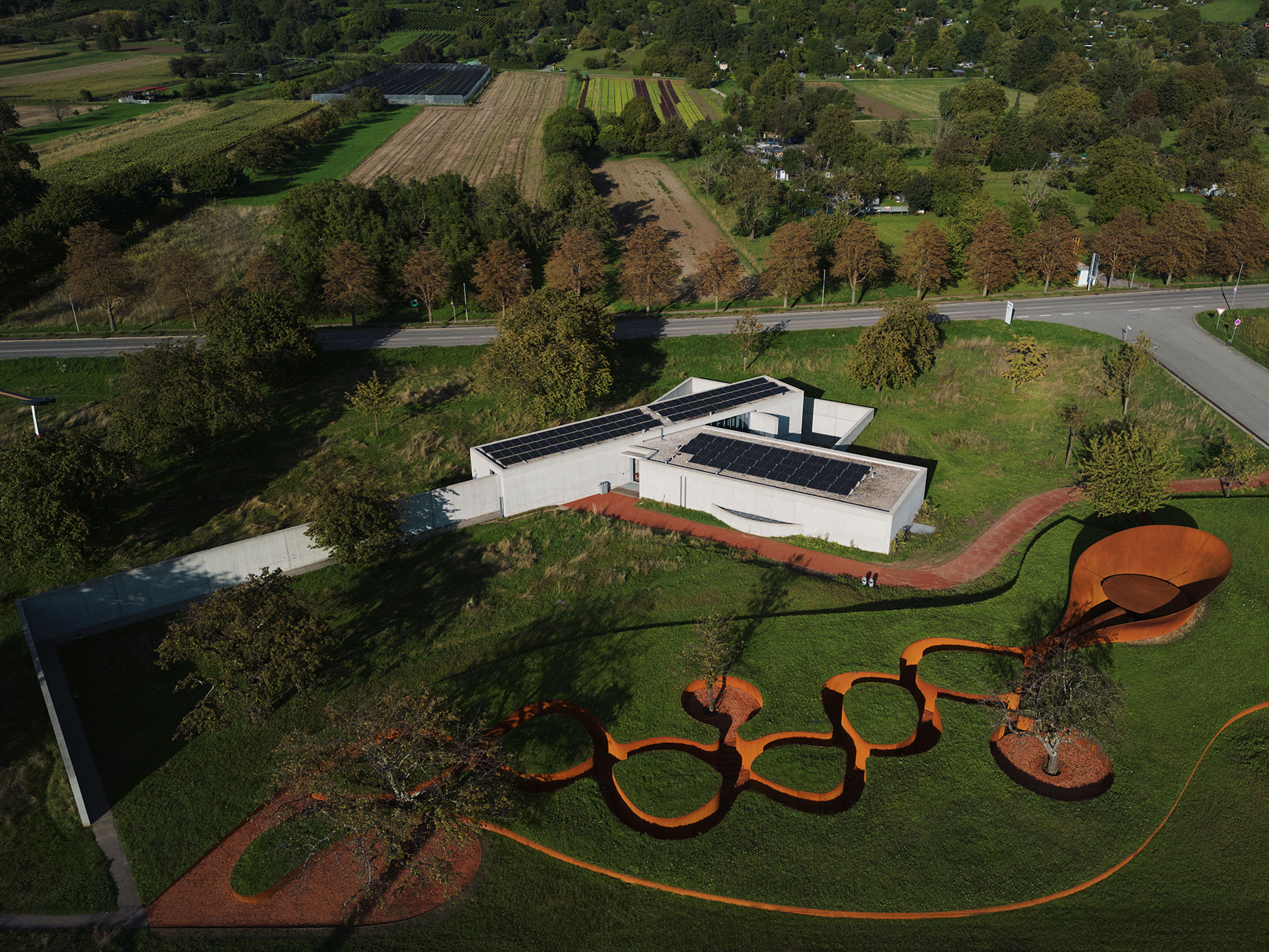
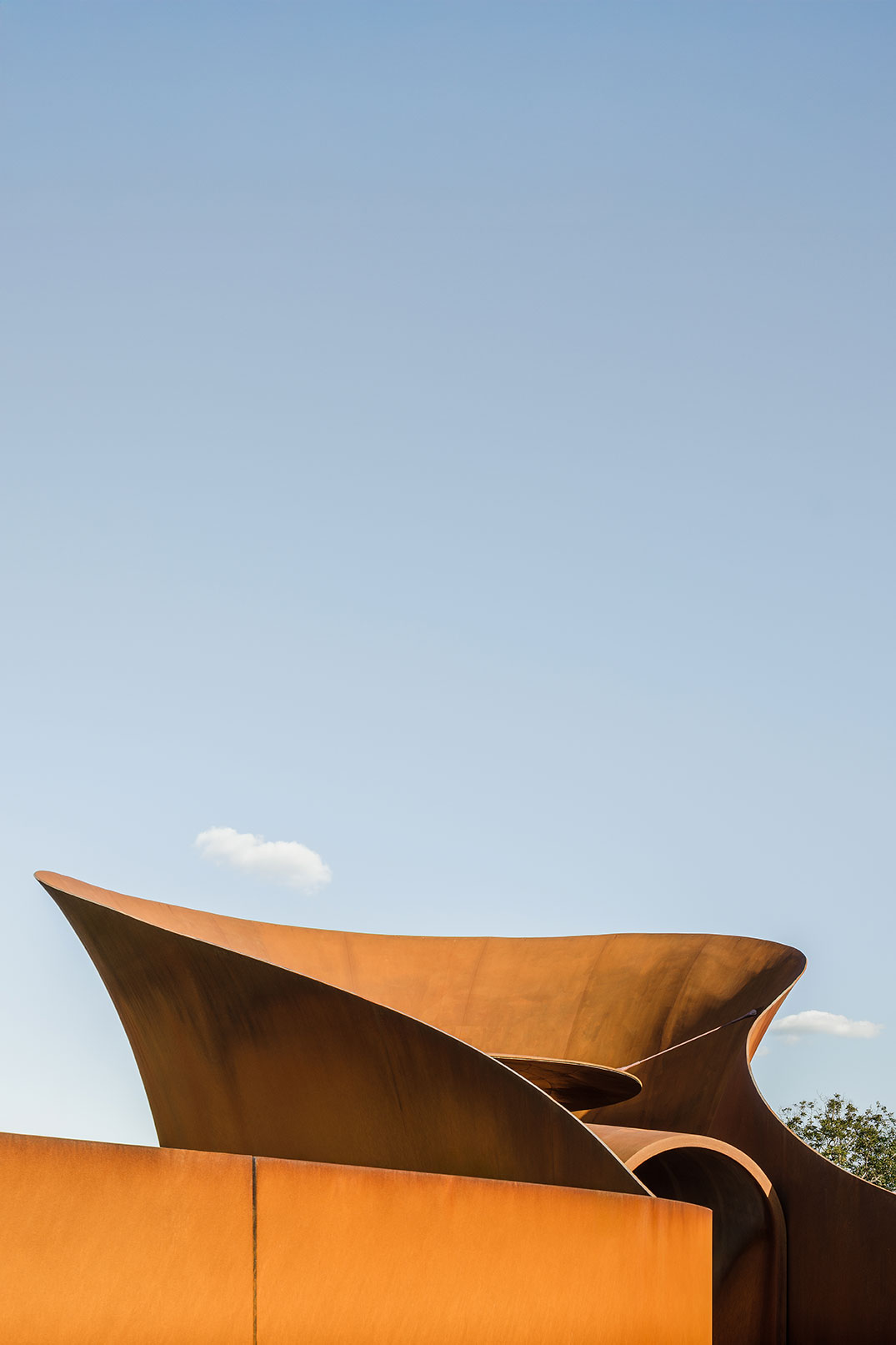
The Vitra Campus in Weil am Rhein unveiled the Doshi Retreat to the public on 25 October 2025. Conceived by Pritzker Laureate Balkrishna Doshi, Khushnu Panthaki Hoof and Sönke Hoof, the project draws from Indian spirituality and the notion of a journey – symbolically expressed through Kundalini, the ascent of energy through seven chakras. Its realization was beautifully guided by Studio Sangath.

At night, the lighting design by Licht Kunst Licht becomes an intrinsic layer of the narrative — a medium for introspection, guidance, and emotional resonance.

Over the decades, the Vitra Campus has transformed from an industrial site into a public park welcoming more than 400,000 visitors annually. With the inauguration of the Doshi Retreat, the campus gains a contemplative addition — a sanctuary for peaceful solitude and repose.

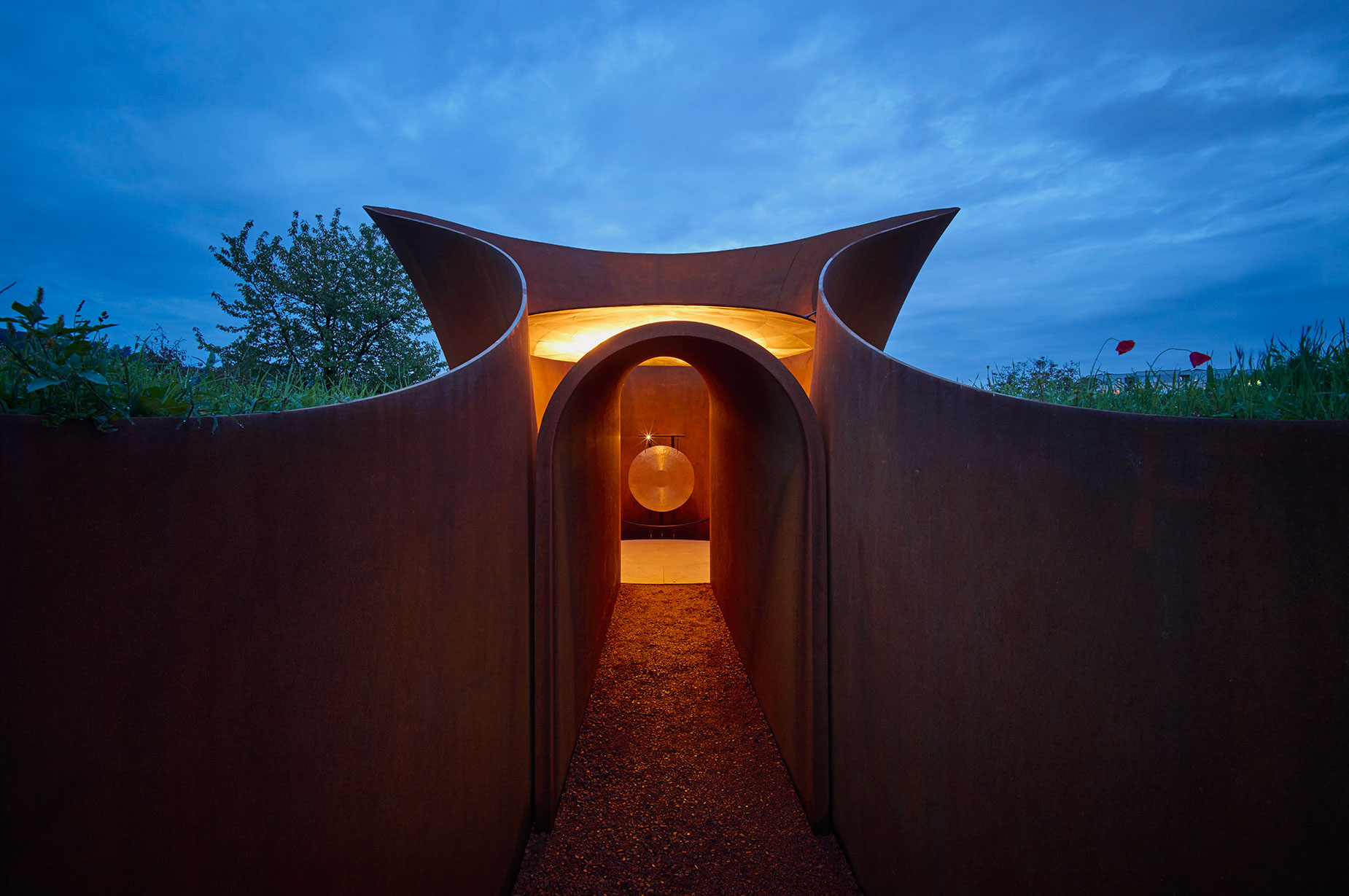
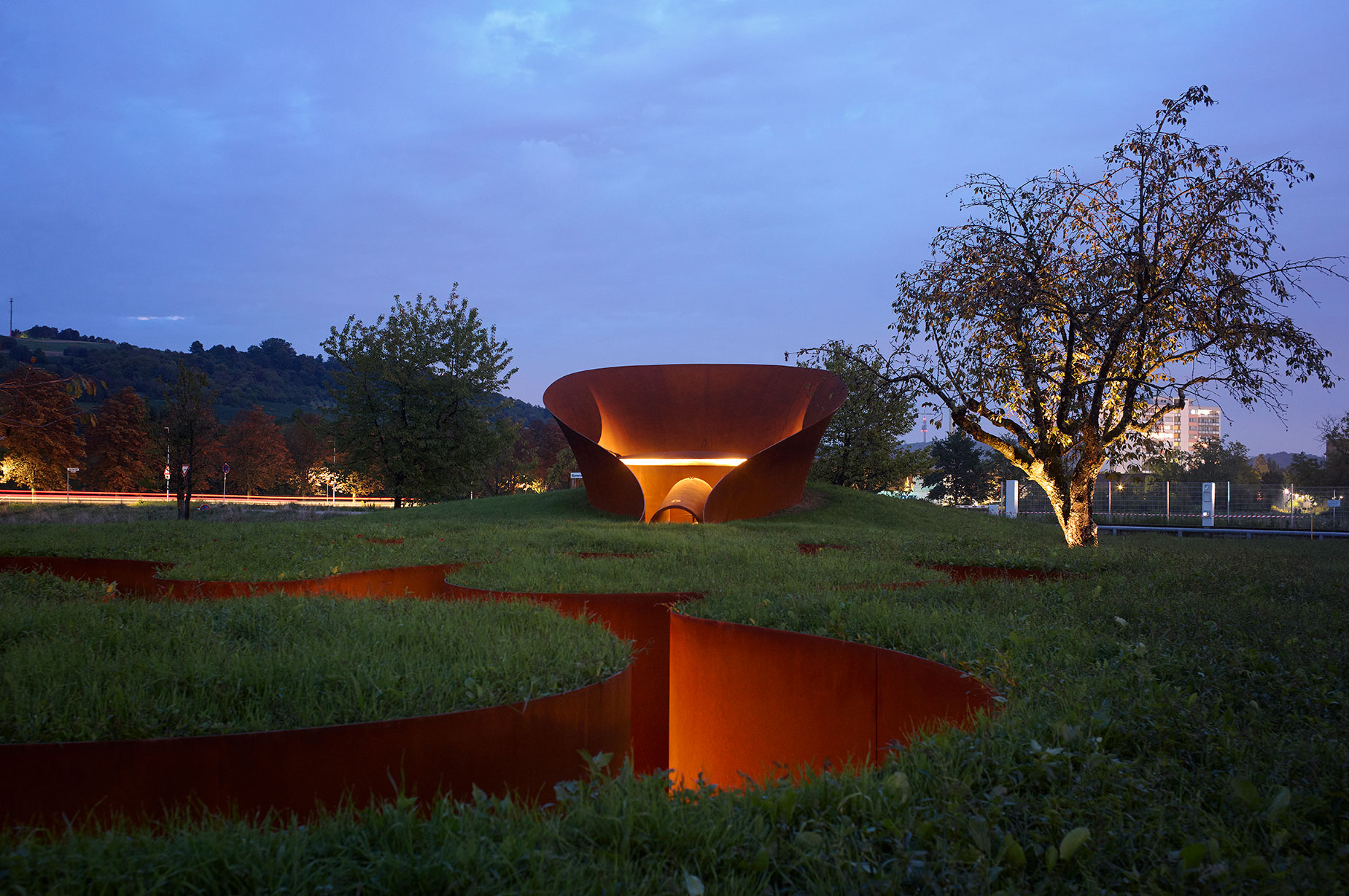
From the outset, the lighting concept was rooted in restraint. By day, the retreat rests quietly within the landscape; by night, it reveals itself only through a faint, almost imperceptible warm glow reflecting the essence of the architecture.
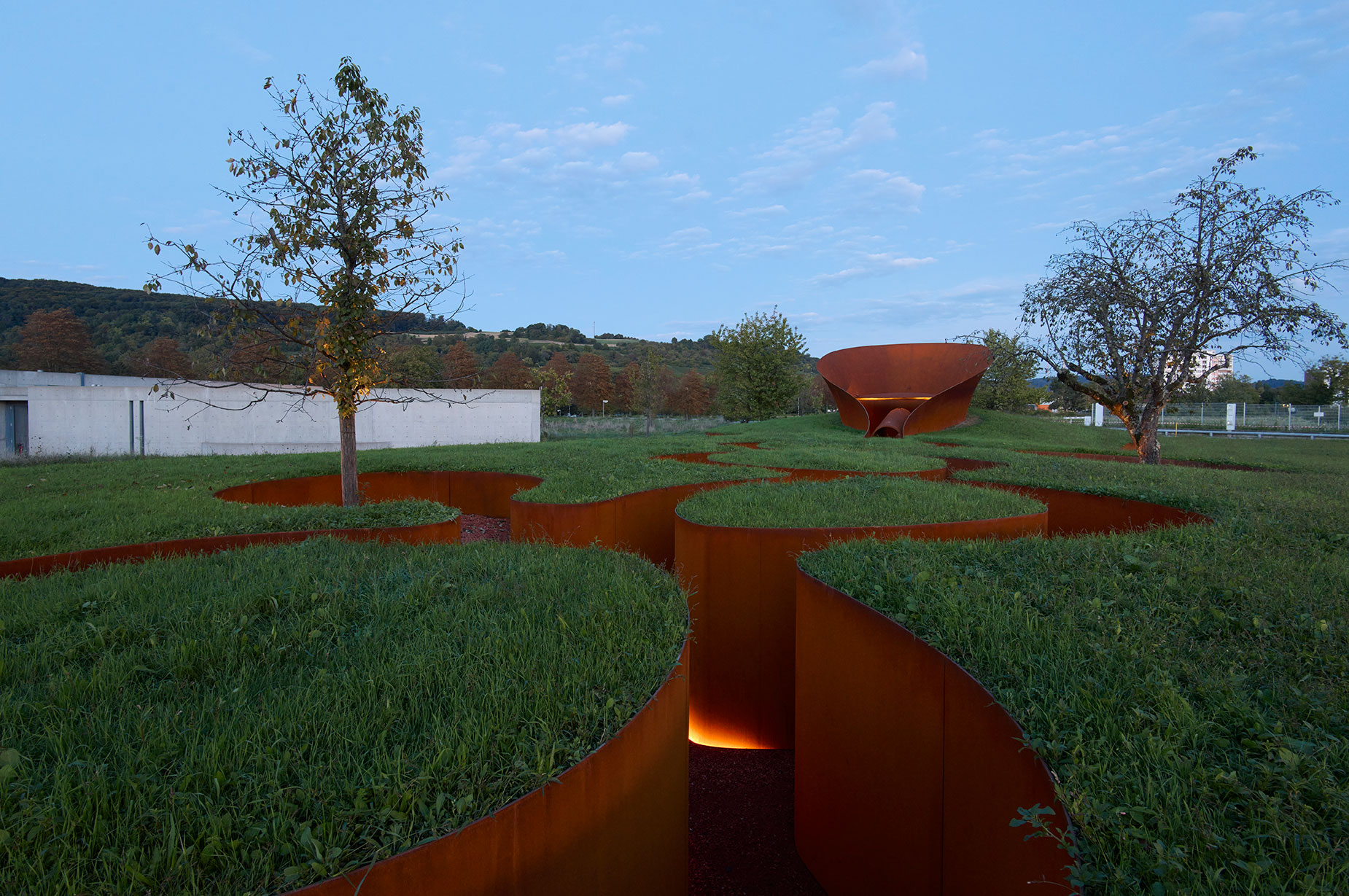


This subtle illumination establishes the retreat as a quiet yet iconic presence — never competing with its surroundings yet always inviting curiosity.

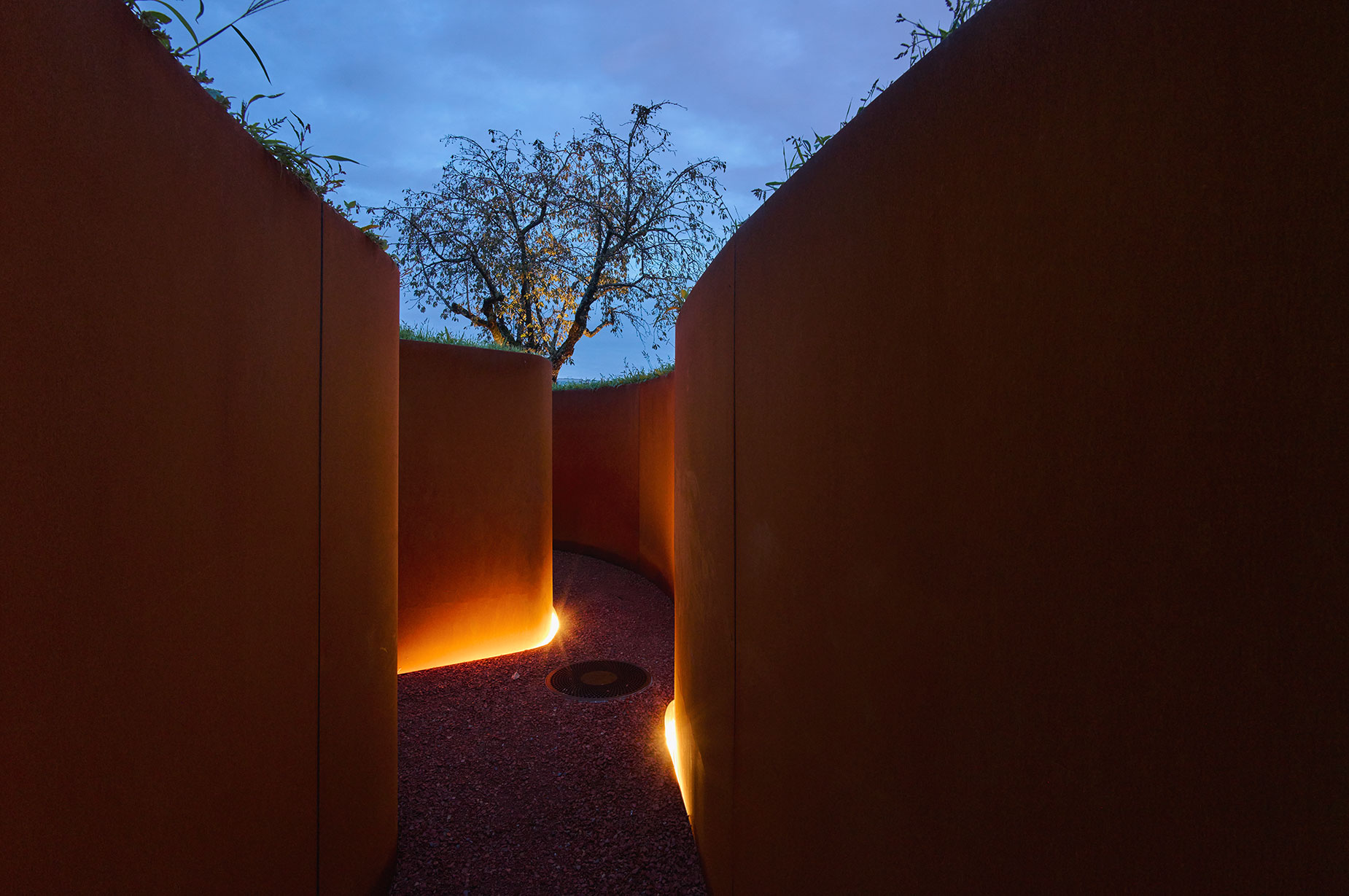
Unfolding as a winding path, the Doshi Retreat invites both physical and metaphorical exploration. As one moves along the route, which descends below ground level, leading along walls that resonate with the gentle sounds of gong and flute, there is a growing sense of transition.

The pathways are defined by an interrupted rhythm of concealed illuminated edges, gently guiding visitors through the descent. At the seven nodes, symbolic of the chakras, boomerang-shaped, floor-recessed details taper and widen, pacing the movement and deepening the experiential quality of the exploration. The 2200K illumination resonates with the warmth of Corten steel, casting a soft amber hue that soothes the night-adapted eye. These ribbons of light provide legibility without distraction, allowing one to turn inward through this journey.


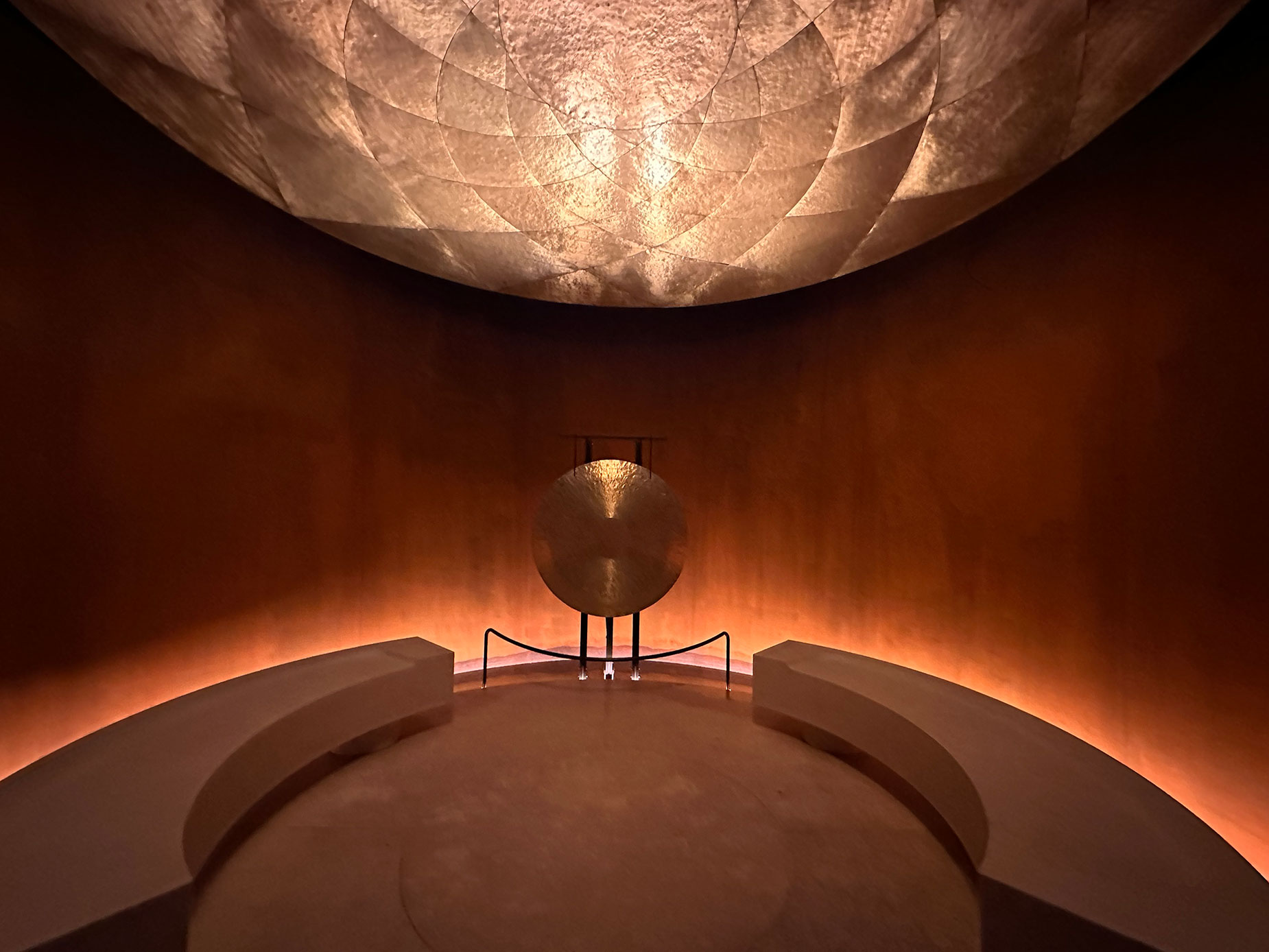
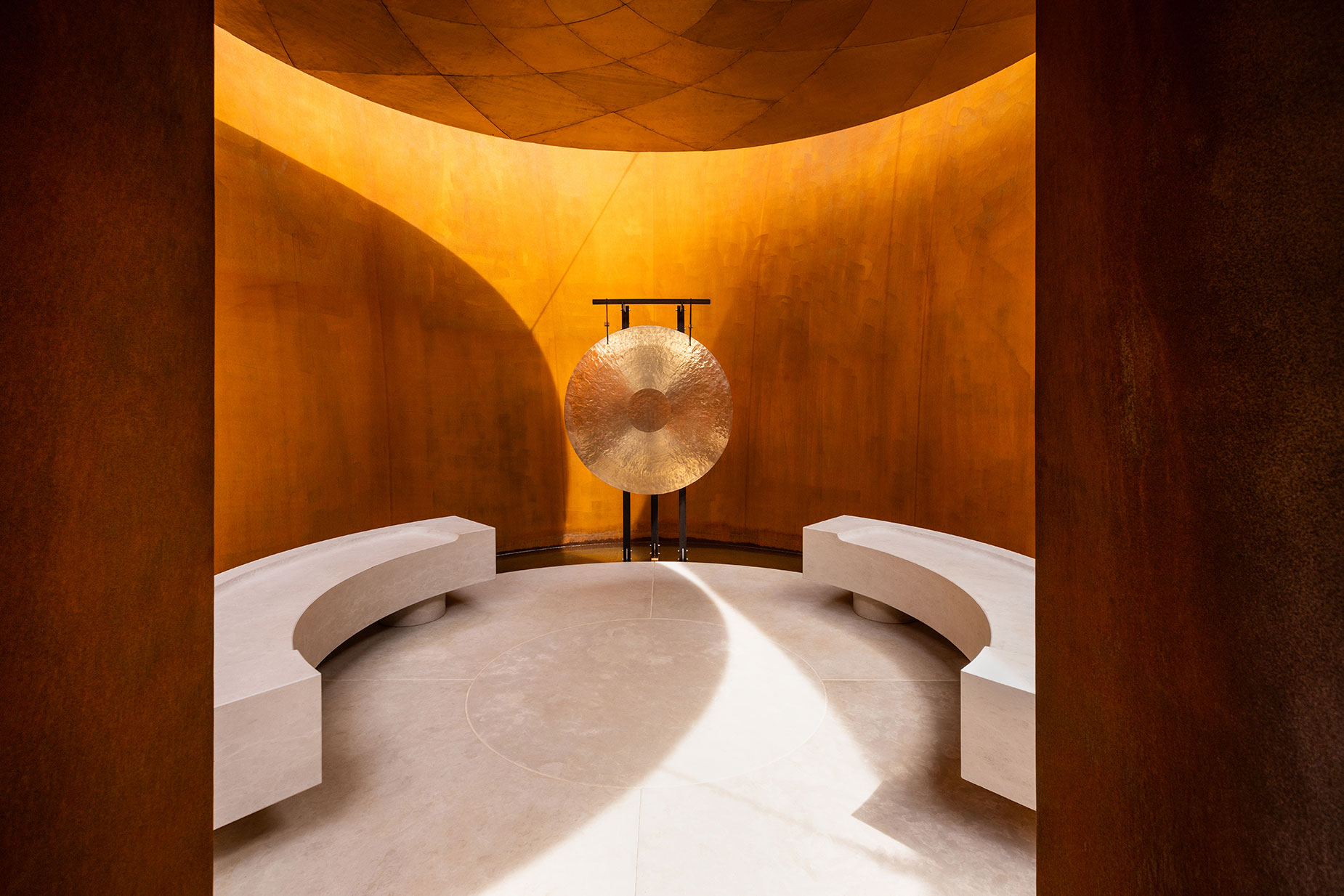
The journey culminates in the gong room, where light and sound converge. A linear halo traces the circular edge of the chamber, while discreet projectors – so well-hidden as to be invisible – illuminate the space. Visitors perceive only a mysterious glow, reflected by a brass soffit that shimmers in resonance with the meditative sound of the gong. Here, light transcends its functional role to become an instrument of introspection and transcendence. The ceiling only partially encloses the chamber, allowing an aperture for light, air, and precipitation.

Finally, three cherry trees stand as guardians of the retreat, softly uplit. These are the only vertical expressions of light in the wider landscape. Their illumination is symbolic and restrained.

Experientially, the lighting cultivates silence and reflection. Iconically, it demonstrates that subtlety can be as powerful as spectacle. Functionally, it ensures clarity and safety without compromising atmosphere.

The Doshi Retreat thus exemplifies a future of architectural lighting rooted in humility, depth, and narrative – where darkness is as significant as light itself, and where space becomes an instrument of solitude and contemplation, awakening the perception of unseen presences.