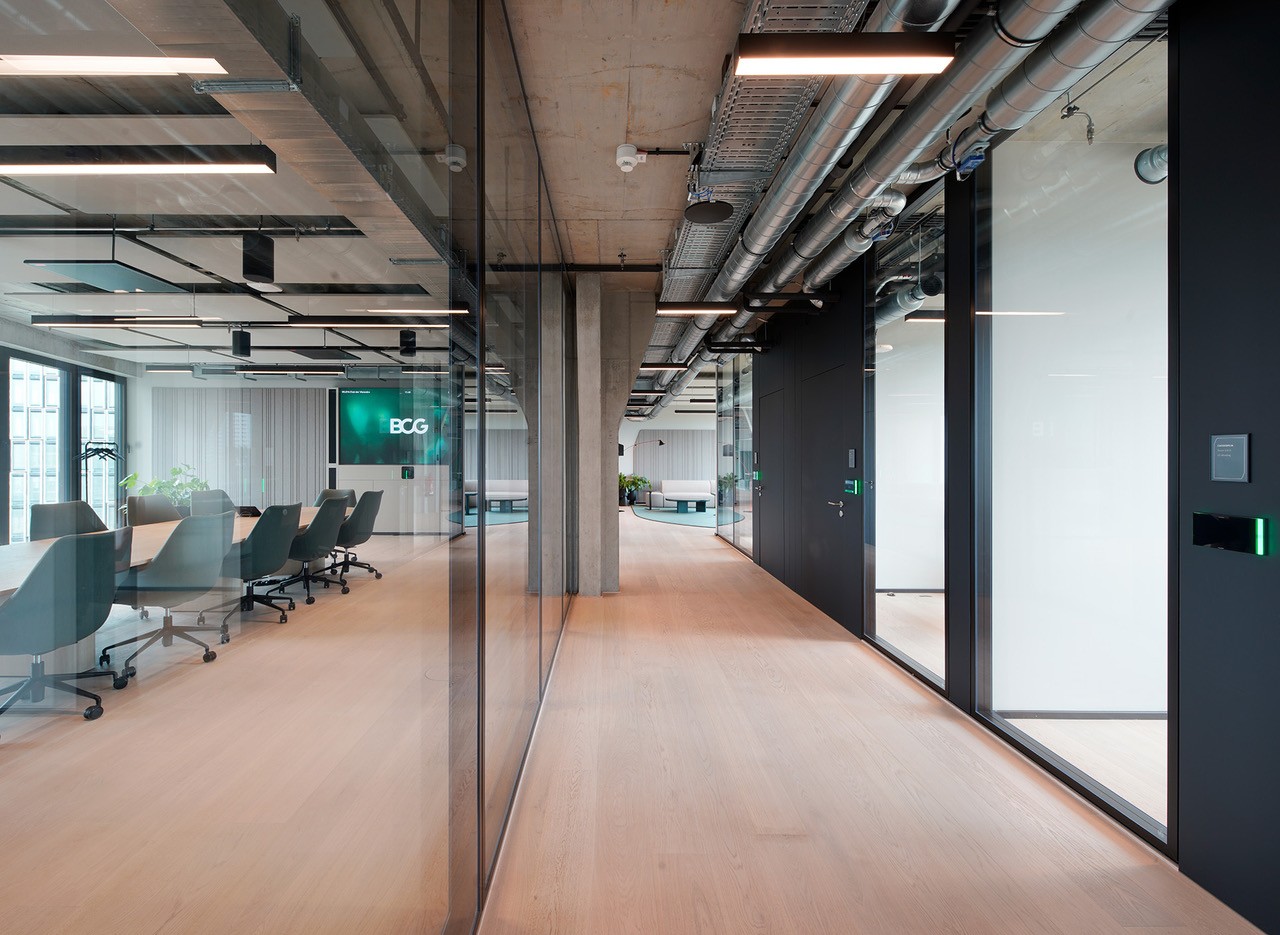
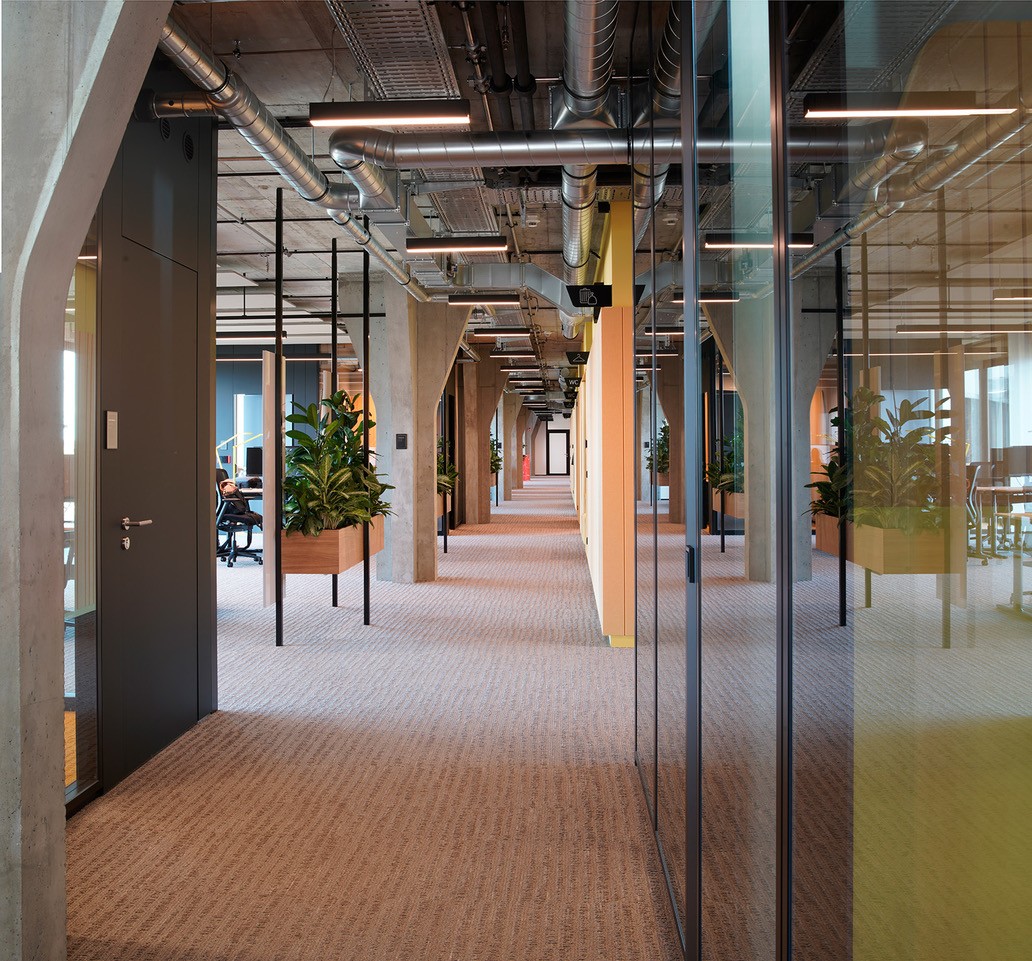
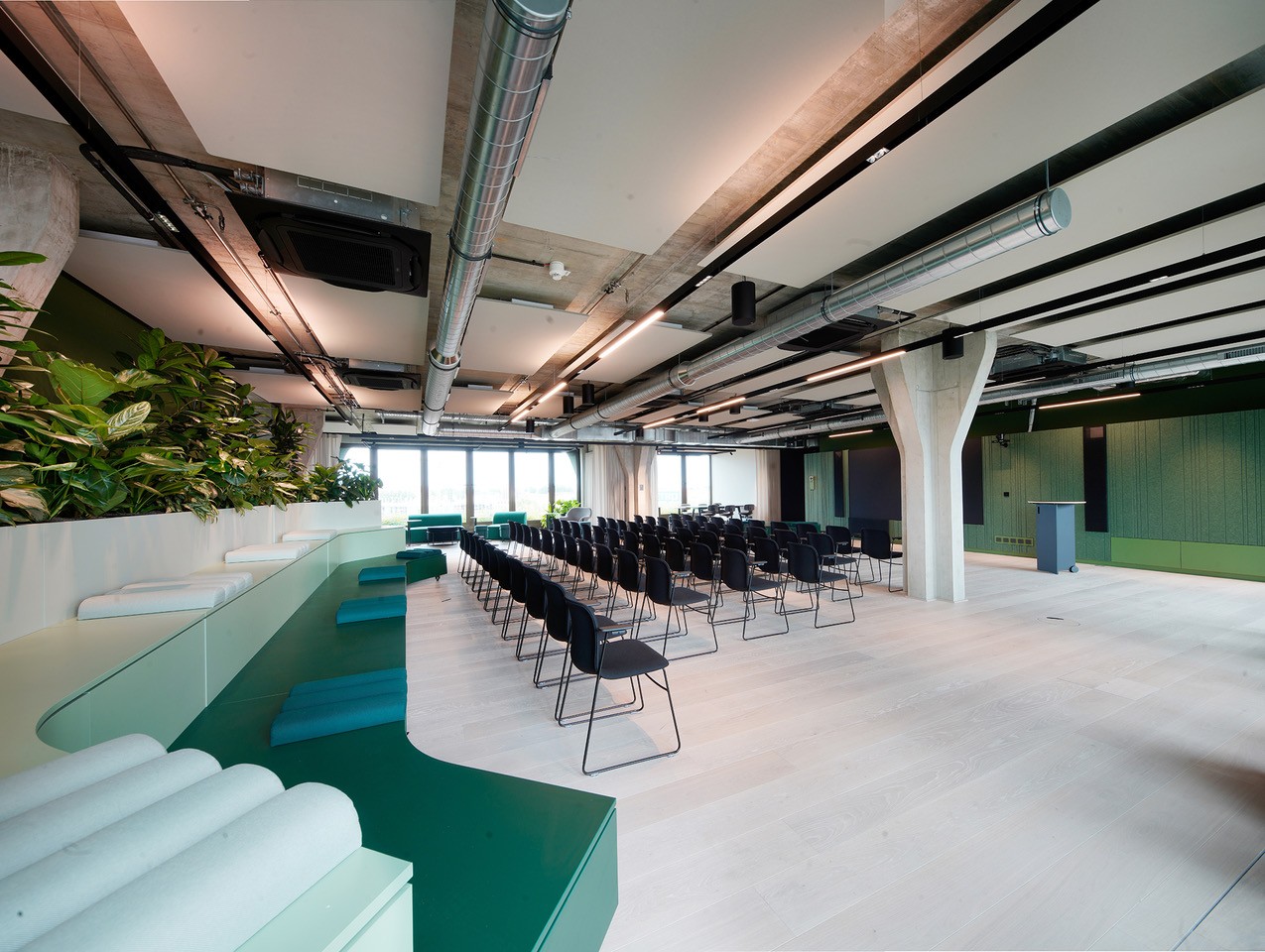
The lighting concept was developed with a tight budget but high design ambitions. The result is a simple, durable system that can adapt to different uses throughout the building. A slender LED track acts as a unifying element, running consistently through all spaces.
In the office areas, lighting is intentionally kept minimal, with a base level of around 300 lux, allowing users to personalize their workspaces with their own desk lighting. This keeps the overall setup efficient while giving individuals more control over their workspace.
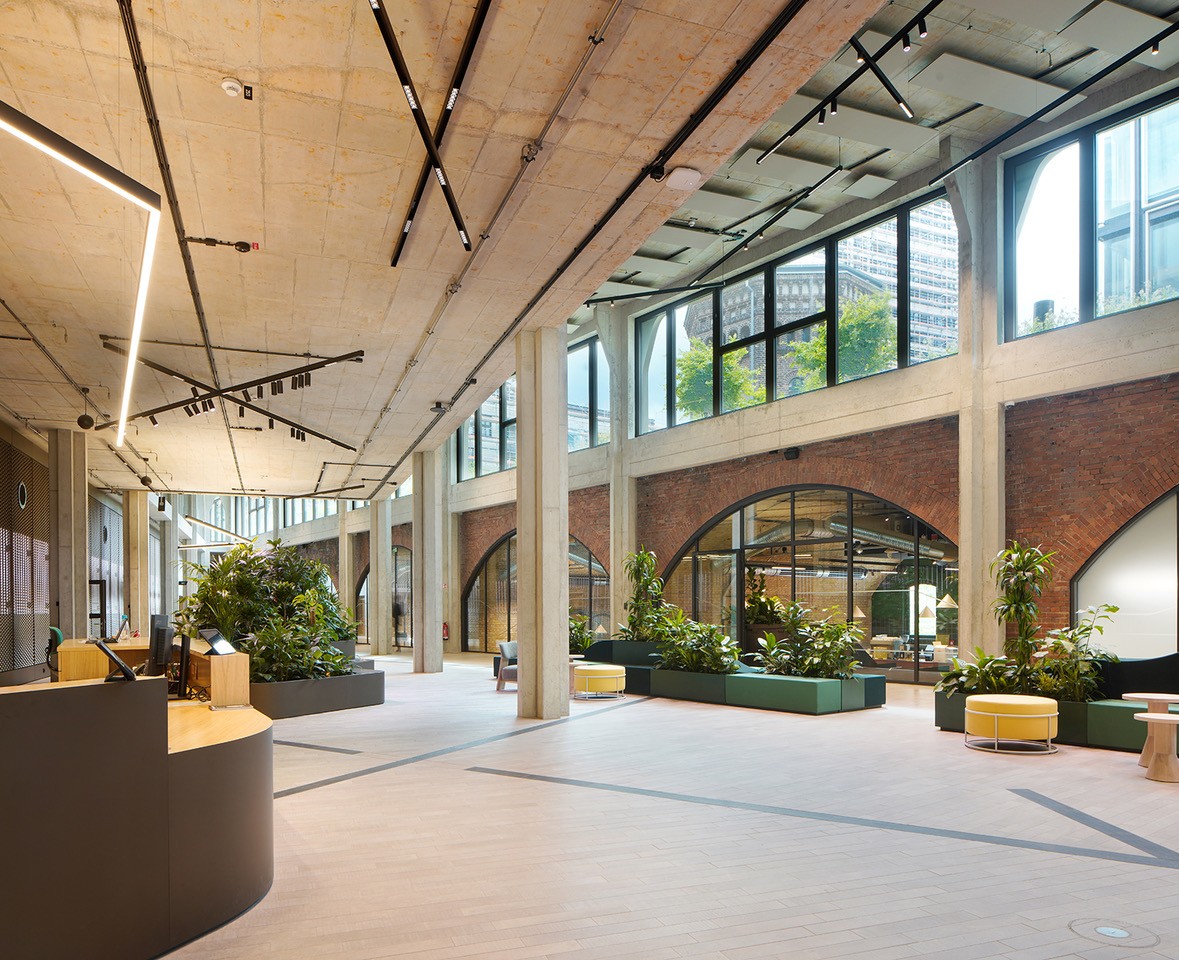
The atrium, the heart of the building, combines flexibility with a strong visual presence. Here, the LED tracks are arranged in layered and sometimes opposing directions across both single- and double-height spaces. A mix of indirect light, spotlights, and diffused sources creates a dynamic atmosphere that works equally well for everyday use and special events.
More challenging were the elevator lobbies, with low exposed concrete ceilings and full visibility from the atrium. The solution was a clean, graphic layout of slim, diffused LED lines across the ceiling, repeated consistently on every level. This design language continues into the emergency staircases, where linear lighting runs along the underside of the stairs from the basement to the top floor, providing both orientation and a strong visual identity.
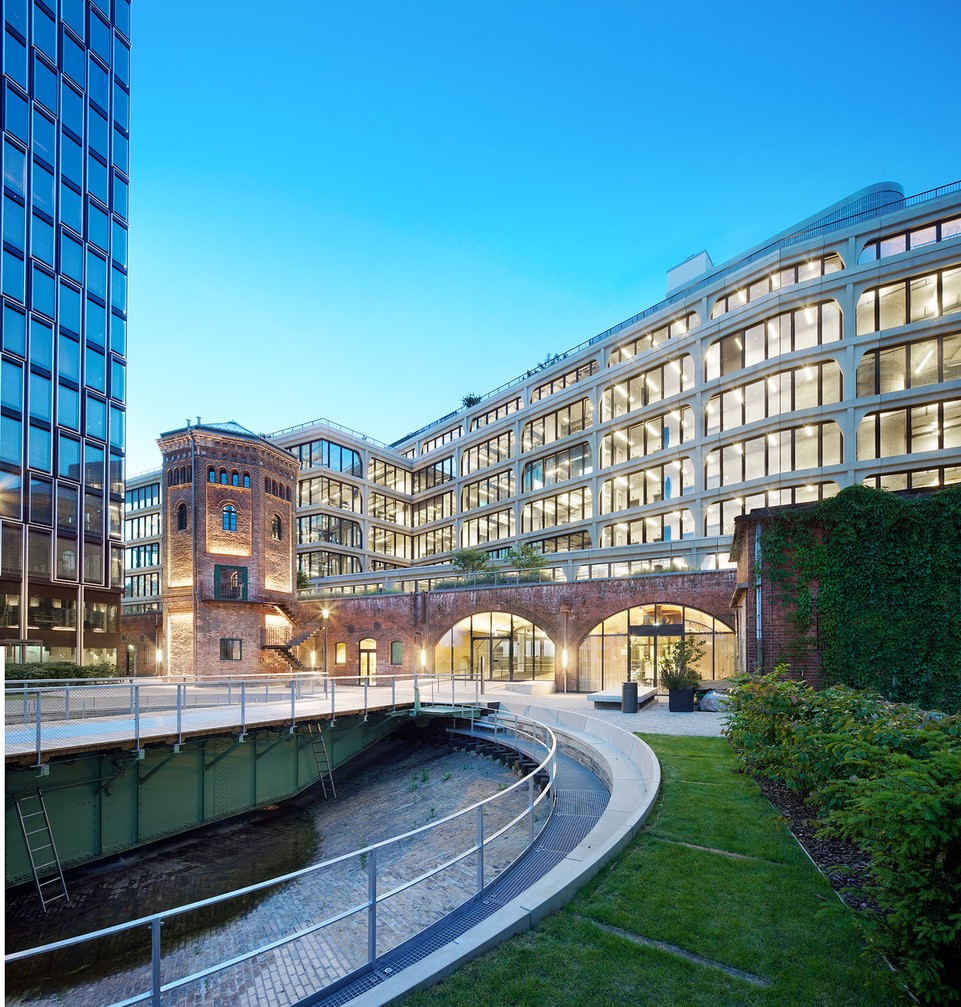
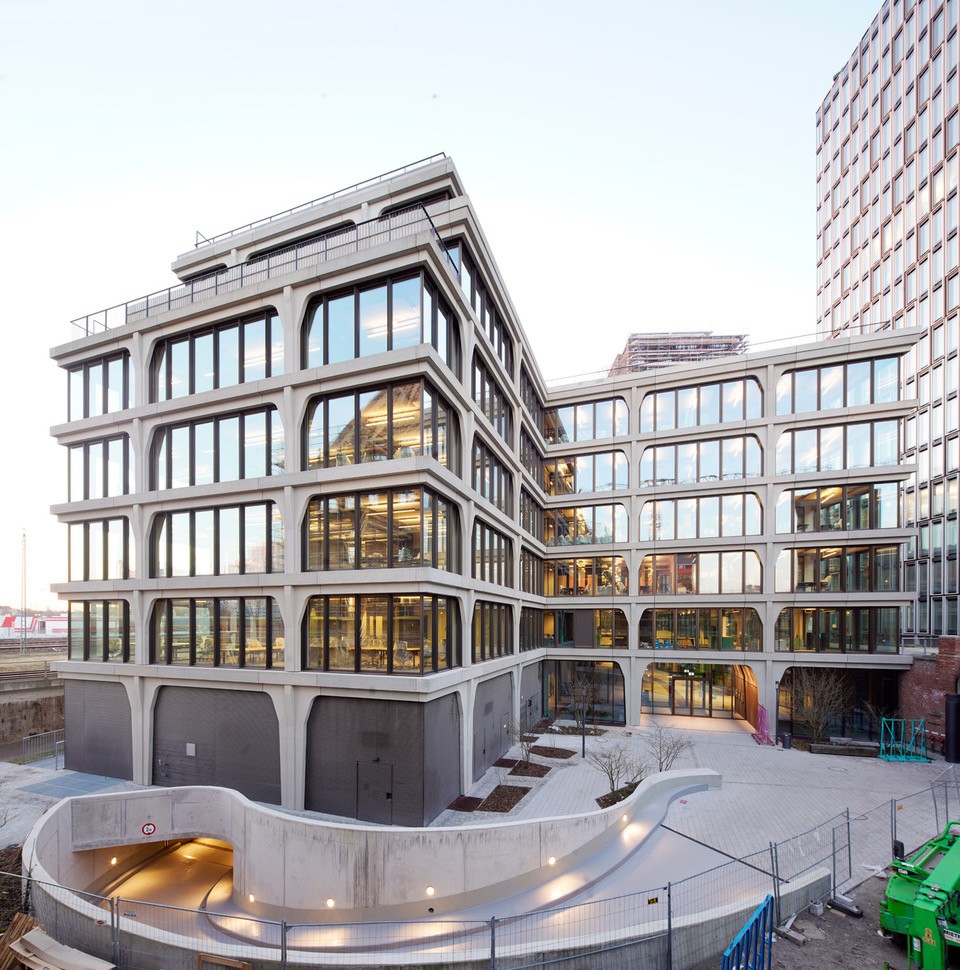
In the adjacent viaduct arches, the lighting system continues and is also adapted. Each arch is defined by two light axes, combining indirect illumination with function-specific elements—task lighting in office areas and accent or pendant lighting in the café. The atrium’s back wall, visible from outside through the arches, becomes a focal point, highlighted through a tailored wall lighting installation, replacing the originally planned color-changing system.
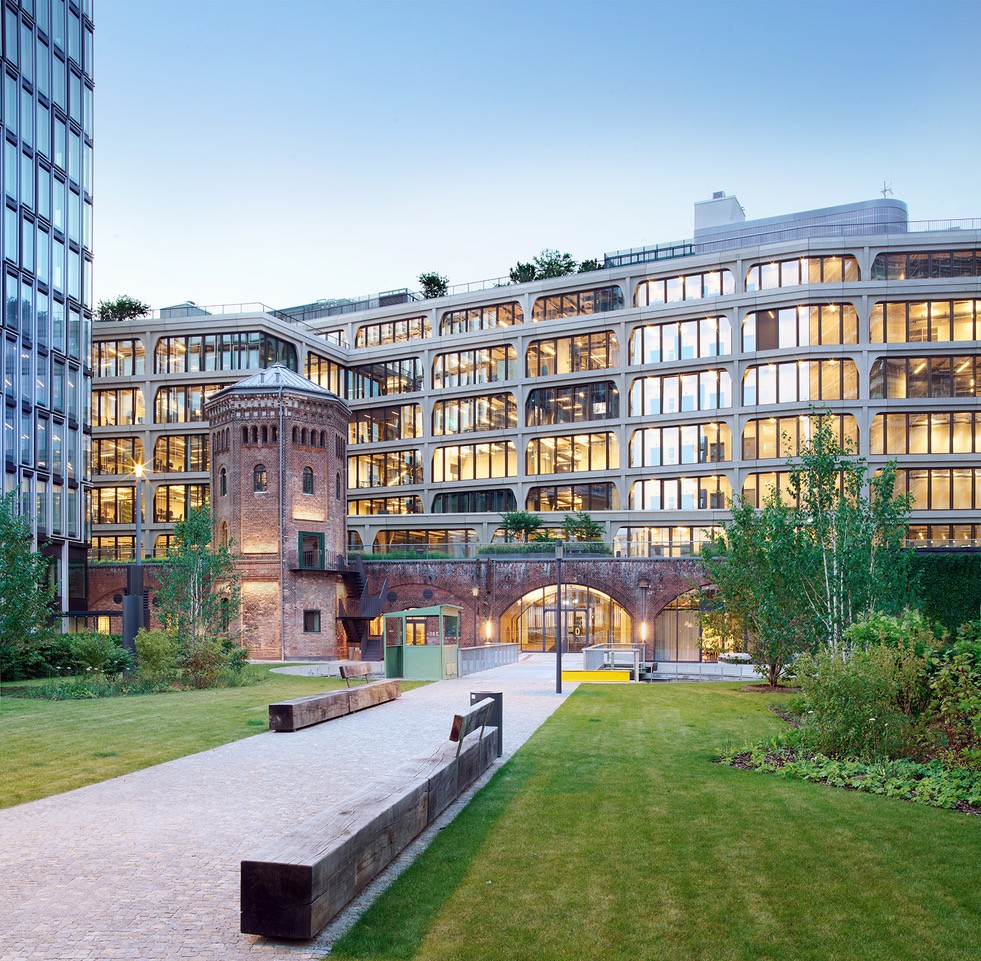
At night, the building’s presence comes from within. The lighting creates a sense of calm und harmony and is integrated into its surroundings, without being overly dramatic. Subtle exterior accents highlight key architectural features: the historic tower is gently illuminated, and the former rail turntable is emphasized from below. The viaduct passage is defined by carefully placed downlights that bring out the geometry of the arches while ensuring a safe and welcoming route.
Overall, the project shows how a clear and restrained lighting strategy can create a strong spatial atmosphere, enhancing both the architecture and the identity of the place.