Licht Kunst Licht AG
Cultural Buildings & Event Locations

Cologne Cathedral

Cologne, Germany
Client
RheinEnergie AG on behalf of the City of Cologne
Construction Management
Kölner Dombauhütte, Metropolitankapitel der Hohen Domkirche zu Köln
Electrical planning
Elektro Baeth GmbH, Cologne
Completion
2025
Photos
HGEsch
Text
Uta Winterhager
Awards
1

When the Cathedral Shines in the Dark

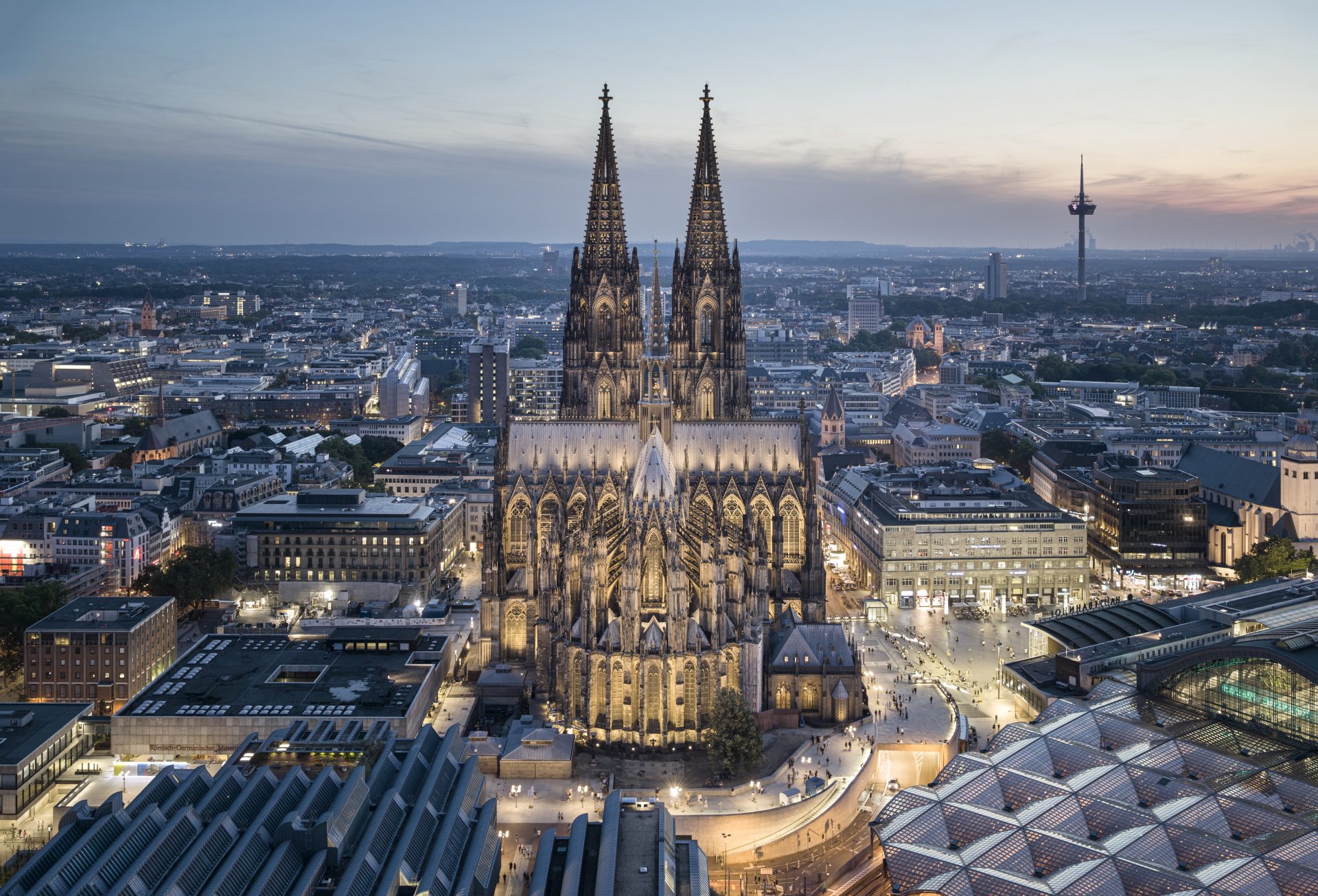
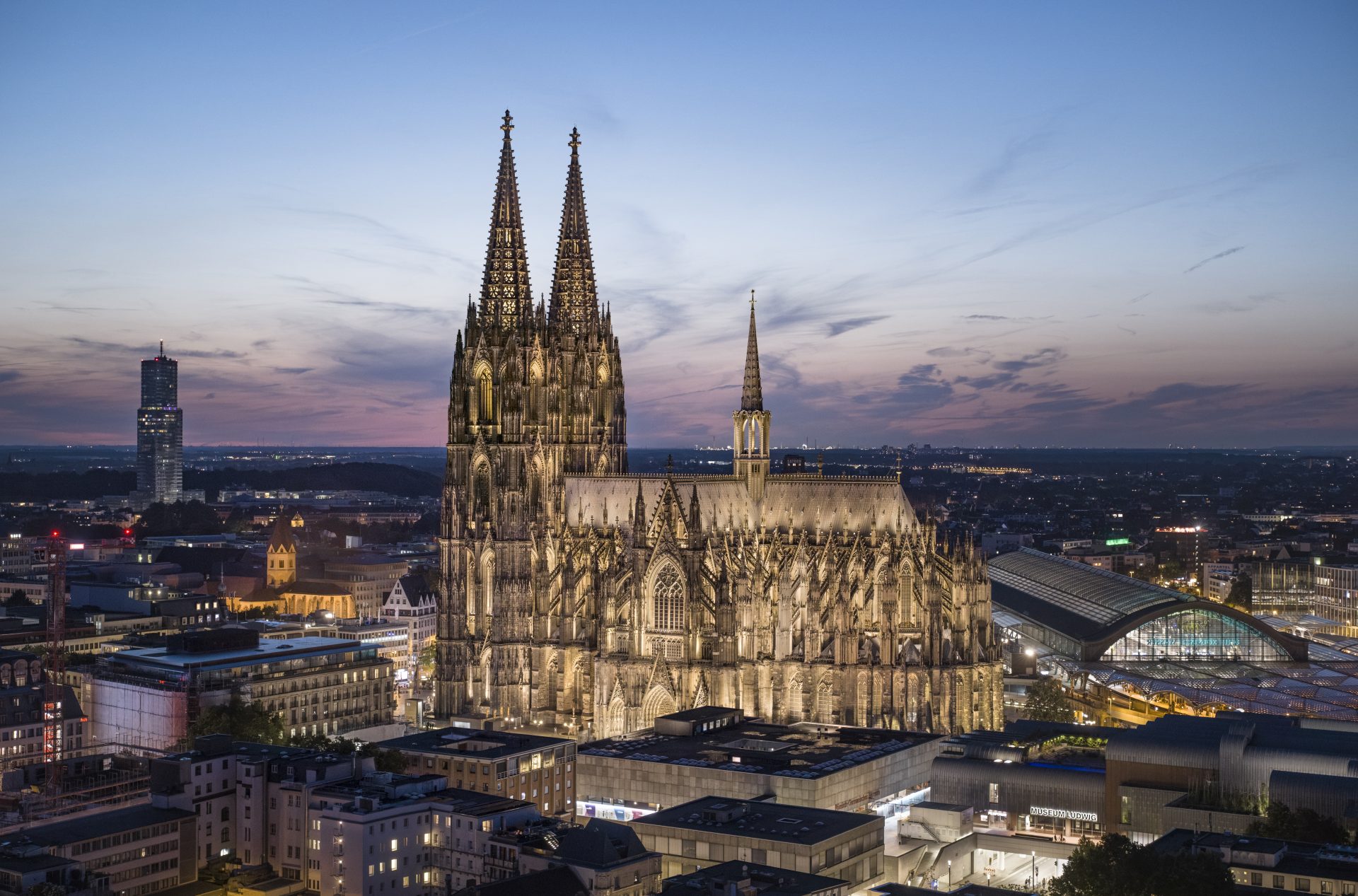
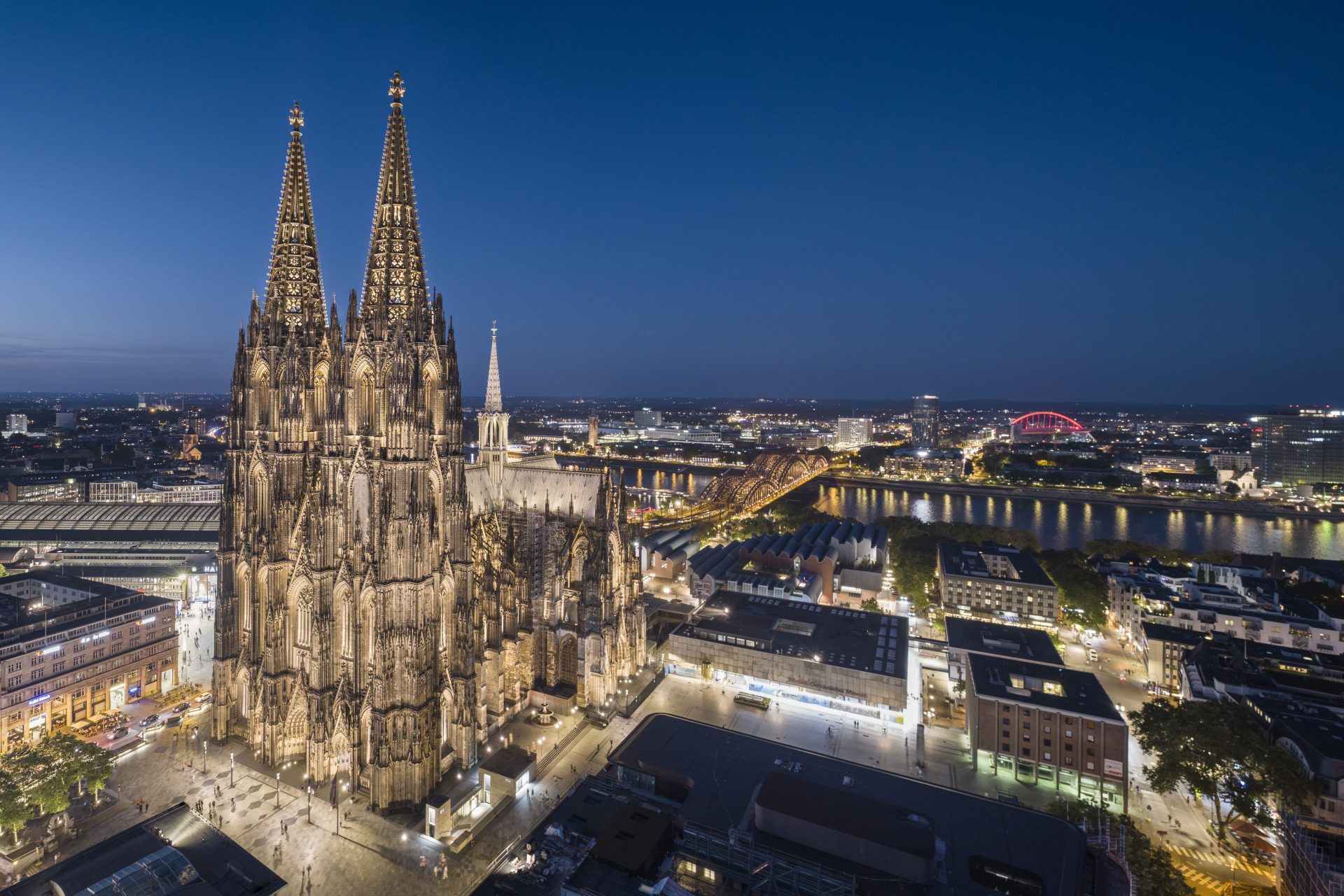
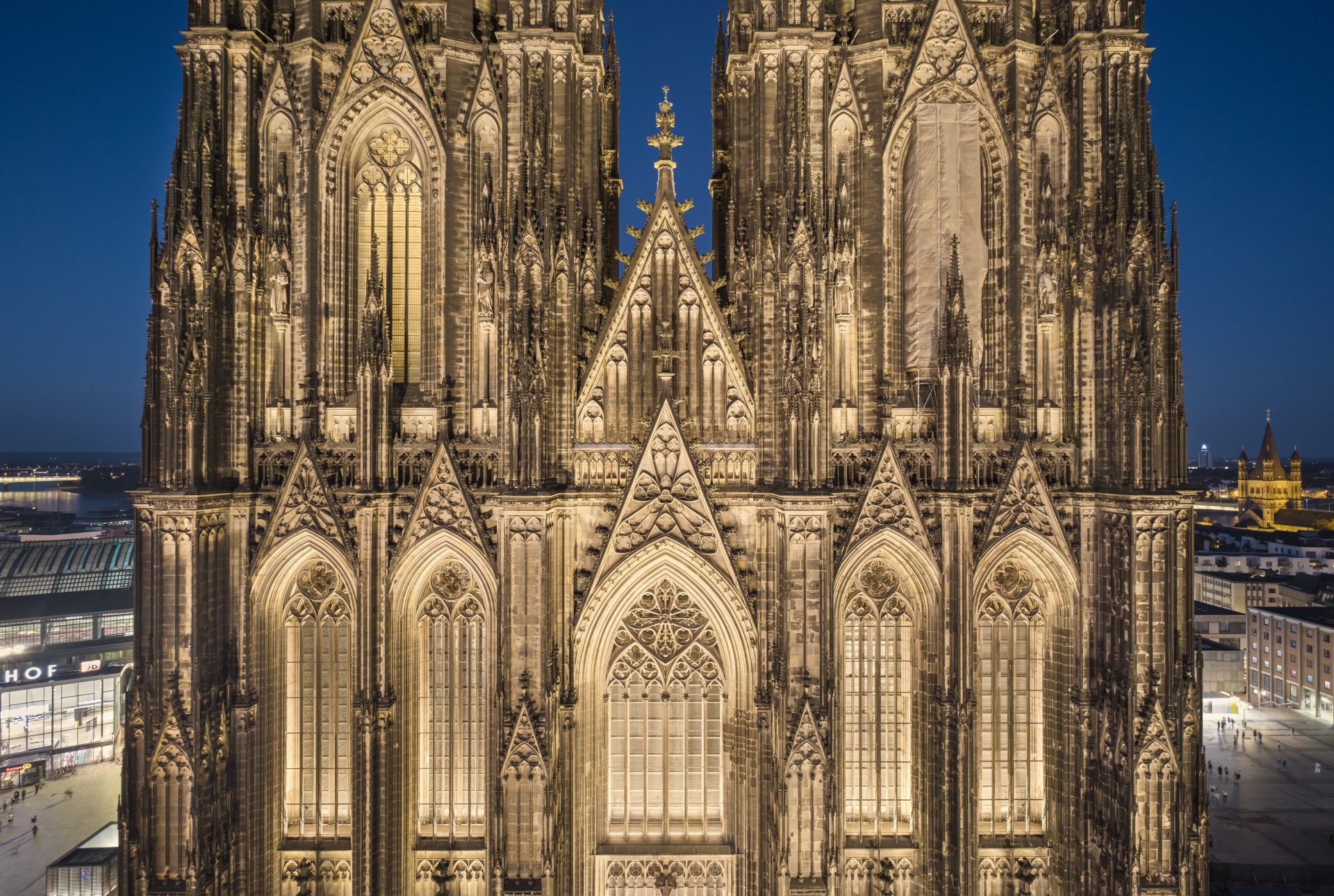
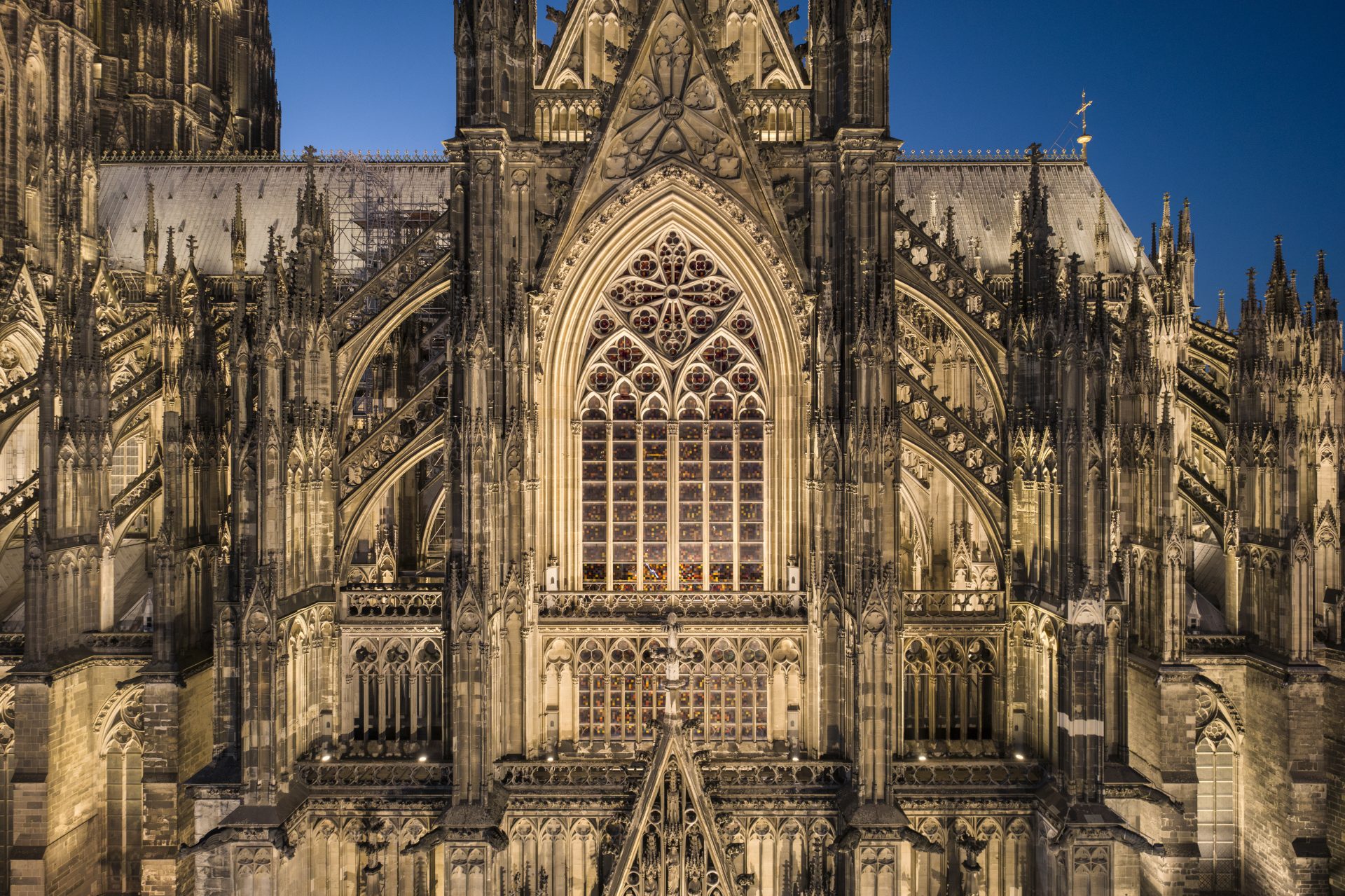
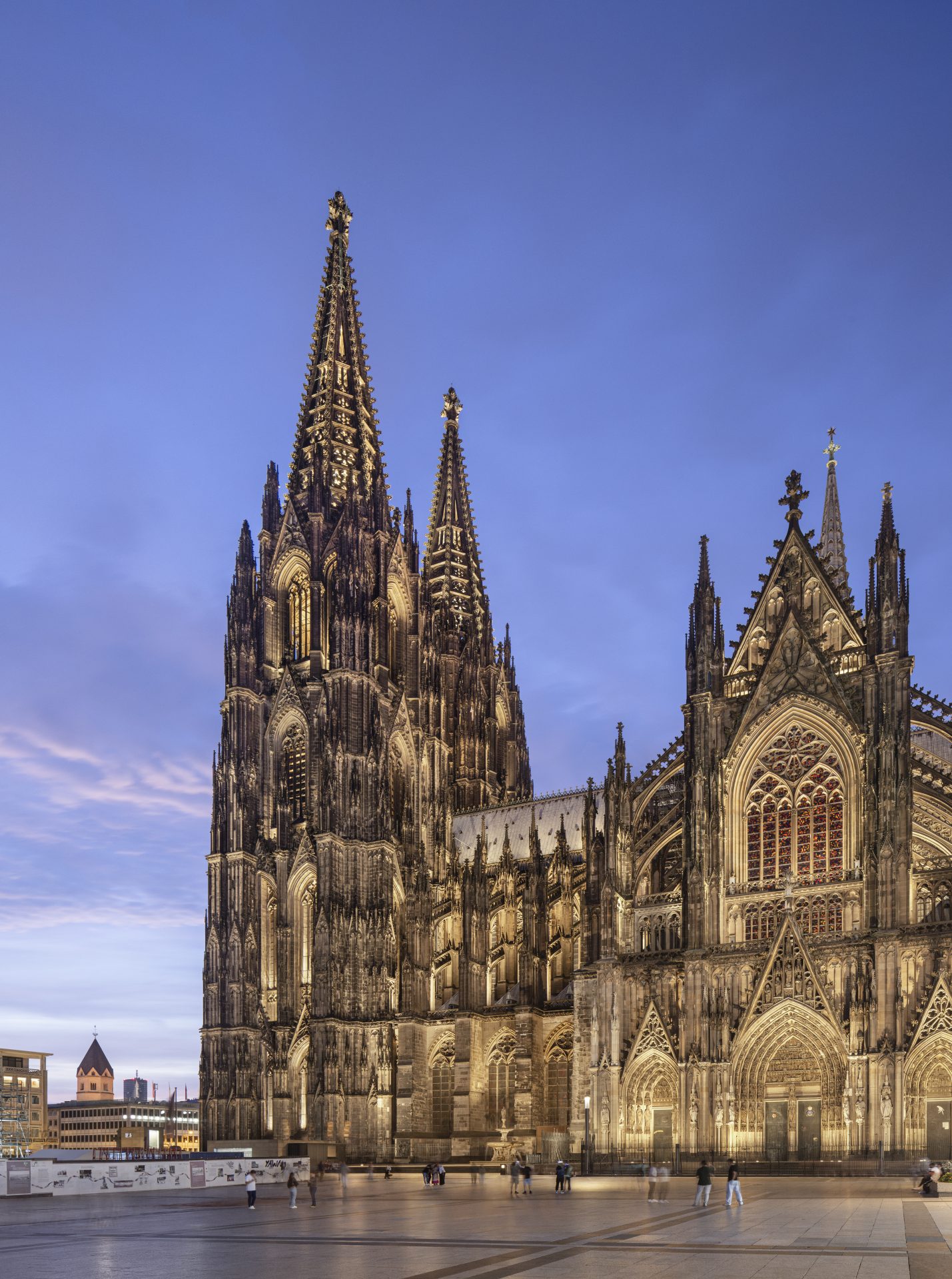
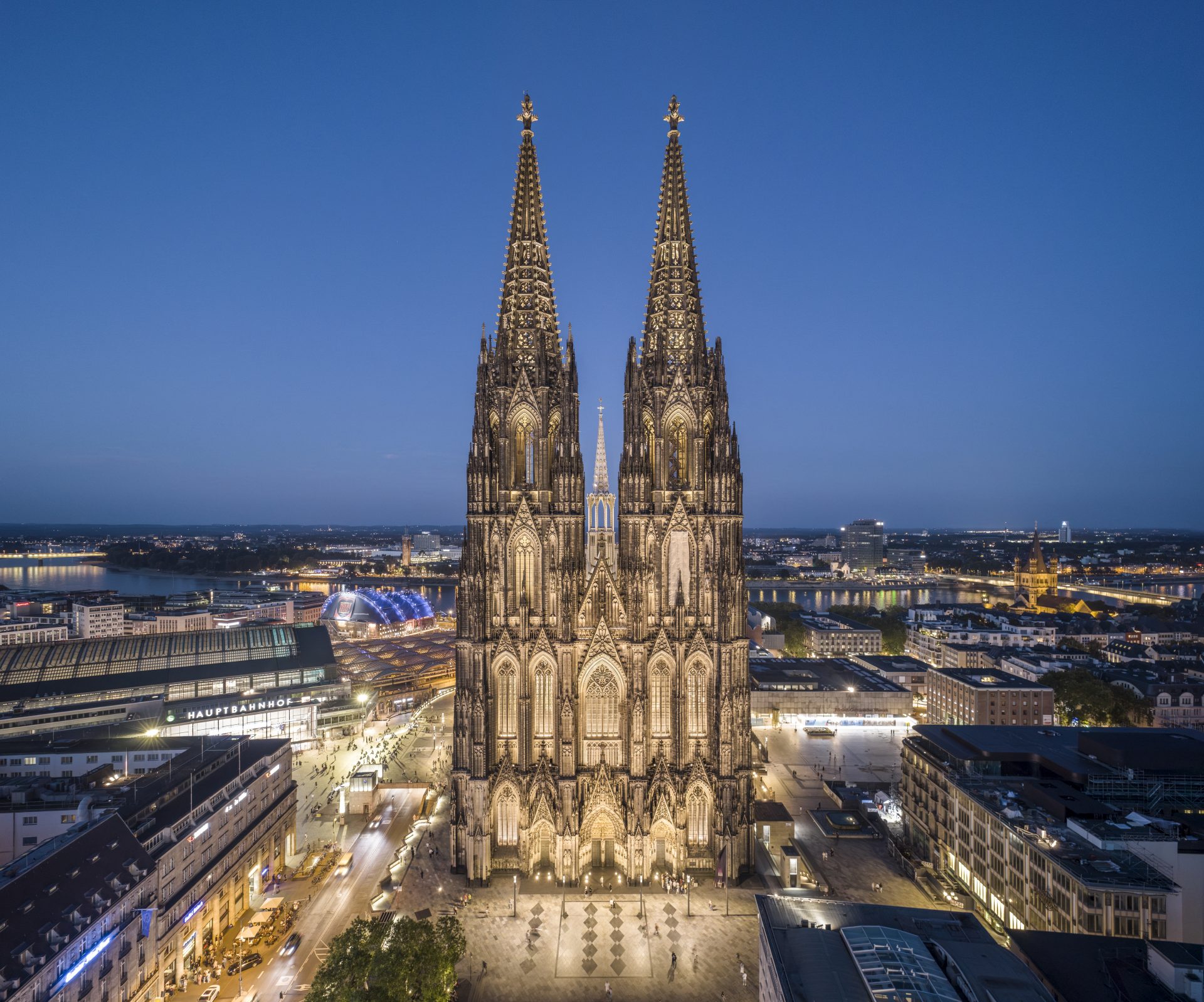
The planners from Licht Kunst Licht, in collaboration with RheinEnergie and the Dombauhütte, have implemented a new, highly efficient lighting concept for the exterior of Cologne Cathedral, which was inaugurated on Easter Sunday 2025. With the switch to a modern and precise LED system, the unique cathedral— designated a UNESCO World Heritage Site since 1996—displays an impressive visual impact after dark and at twilight. Planned with great ecological responsibility, light pollution and energy consumption have been significantly reduced.

In 1838, Crown Prince Friedrich Wilhelm announced a visit to Cologne. In his honor, the impressive yet still incomplete Gothic cathedral, nearly six centuries into its construction, was illuminated for the first time. The effort had an impact: four years later, now crowned king, the Hohenzollern monarch laid the foundation stone for the cathedral’s continued construction. The cathedral was eventually completed, but it wasn’t illuminated until 1929, when Mayor Konrad Adenauer ordered a regular lighting system, that the cathedral’s distinctive twin towers became a feature of Cologne’s nighttime skyline.

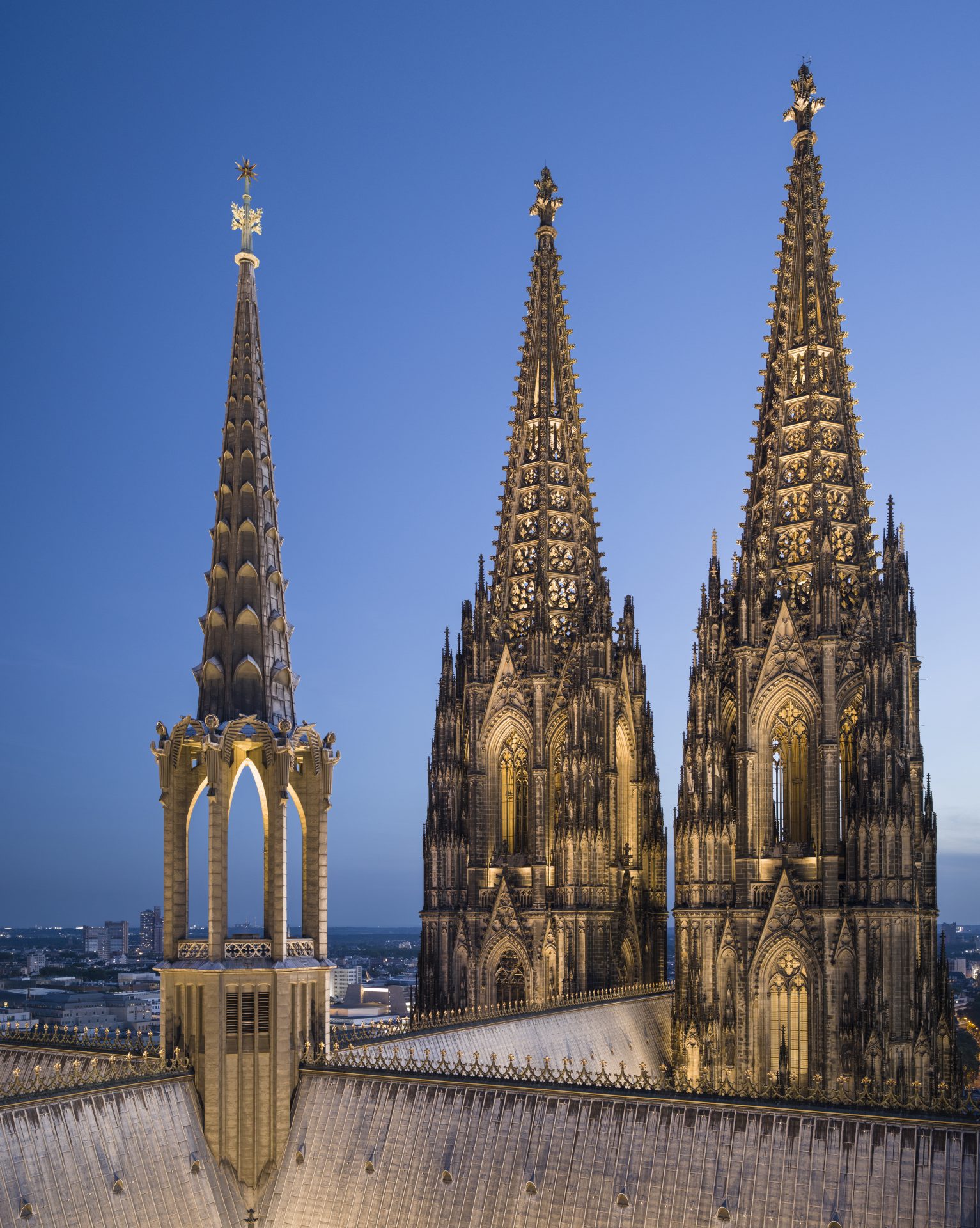
The deep spiritual and secular significance of this image became evident in the summer of 2022, when the lighting of public buildings—including the Cologne Cathedral—was turned off at night due to the energy crisis caused by Russia’s war of aggression. By that time, however, Licht Kunst Licht (LKL) was already developing an energy-efficient and environmentally responsible lighting system worthy of the cathedral’s cultural significance. They had even sent a small signal in 2020, with the installation of the Star of Bethlehem atop the crossing tower.

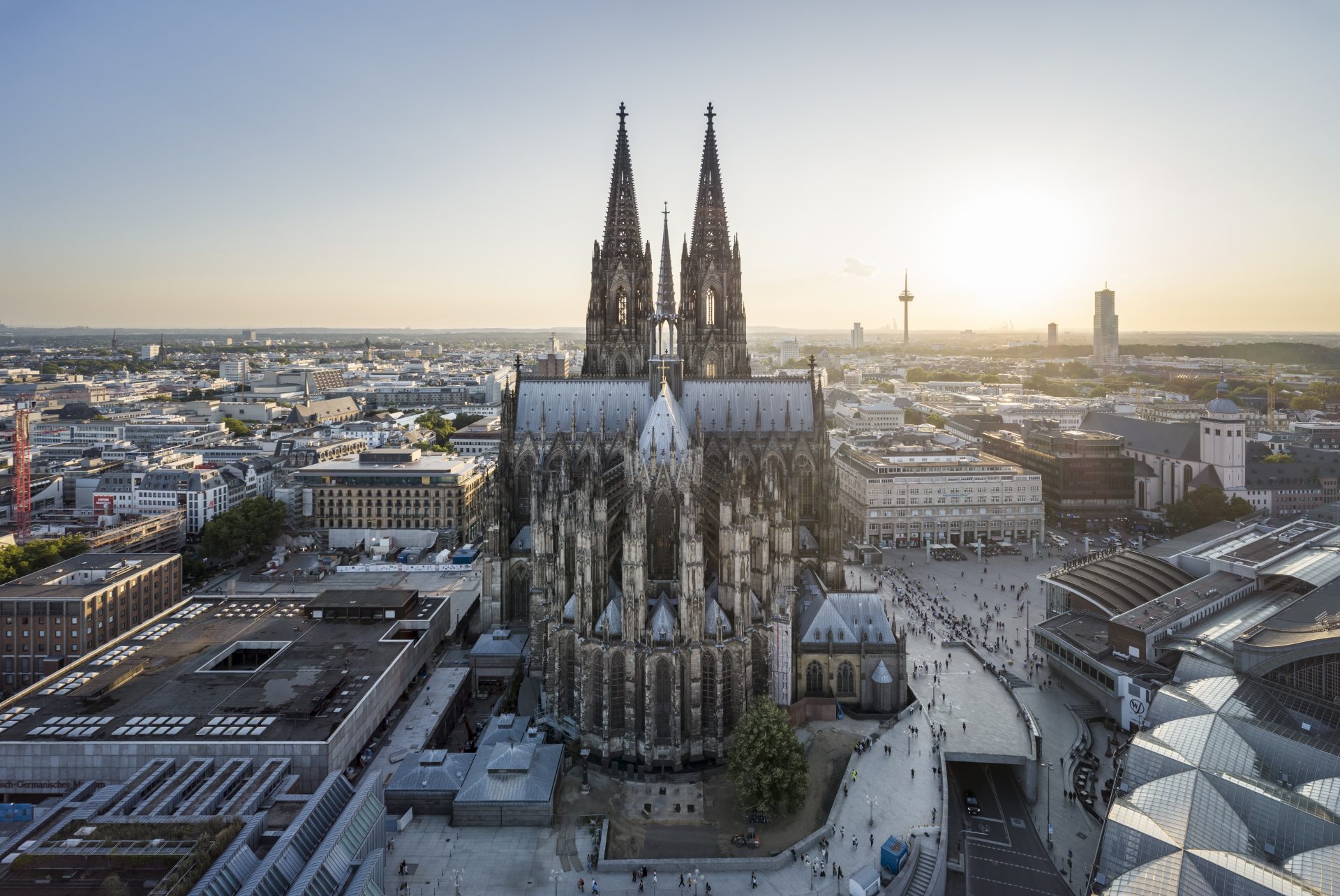
Up to that point, the cathedral had primarily been lit with floodlights mounted on the roofs of surrounding buildings. The outdated 1000-watt metal halide lamps consumed a great deal of energy and flooded the entire building in neutral white light. While this made the cathedral highly visible, the brightness washed out the architectural details of the facade and created considerable light pollution in the surrounding area.
LKL operates under the principle of treating light as an integral part of architecture. This approach presented a particular challenge here, explains Philipp Schmitz, lighting designer and project lead at LKL:
“The lack of detailed architectural documentation required an extensive analytical study of the facade and Gothic elements. Because digital simulations were insufficient for such a complex, heterogeneous structure, we conducted years of extensive on-site lighting tests—experimenting with optics, angles, and positions to achieve the desired effects through empirical observation.”

In close cooperation with the Dombauhütte and RheinEnergie as the commissioning body, LKL developed a lighting system comprising over 700 fixtures. These were installed with great precision and sensitivity as compact, glare-free units on or in front of the historic structure, virtually invisible during the day. The luminaires are discreetly placed and designed to be completely hidden and not stand out as objects.

Only 10% of the light now comes from fixtures located away from the building, compared to 80% previously. This significantly reduces unwanted light scatter and improves overall precision. The lighting is fully dimmable, and the color temperature can be adjusted to a warm white of up to 2,700 K, which harmonizes with the sandstone’s color and supports seasonal adaptation and evolving environmental standards.

Sustainability was a top priority throughout the entire planning process. The energy consumption of the new system has been reduced by 80 percent to just 11,000 watts while delivering far superior visual quality.

All new lighting measures are easily dismantled and non-invasive, respecting both the architecture and the cathedral’s status as a living cultural heritage site. Instead of drilling, all elements are mounted using custom clamping systems developed by LKL and the Dombauhütte, which employ lead-padded brackets to distribute pressure and protect the historic structure. From two control centers—one at ground level and one in the crossing tower—as well as via remote access, the lights can be individually or collectively operated to create custom lighting scenarios.

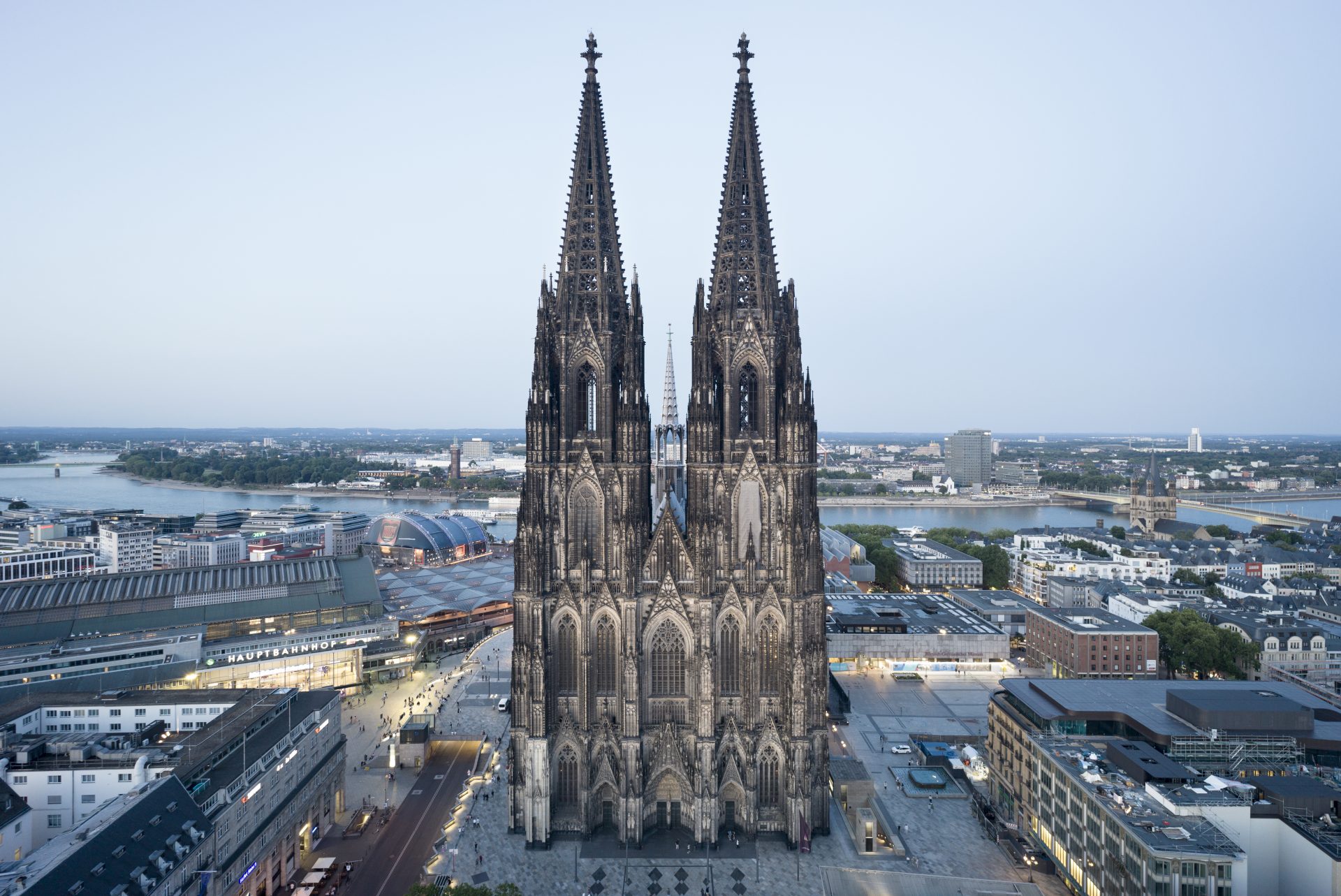
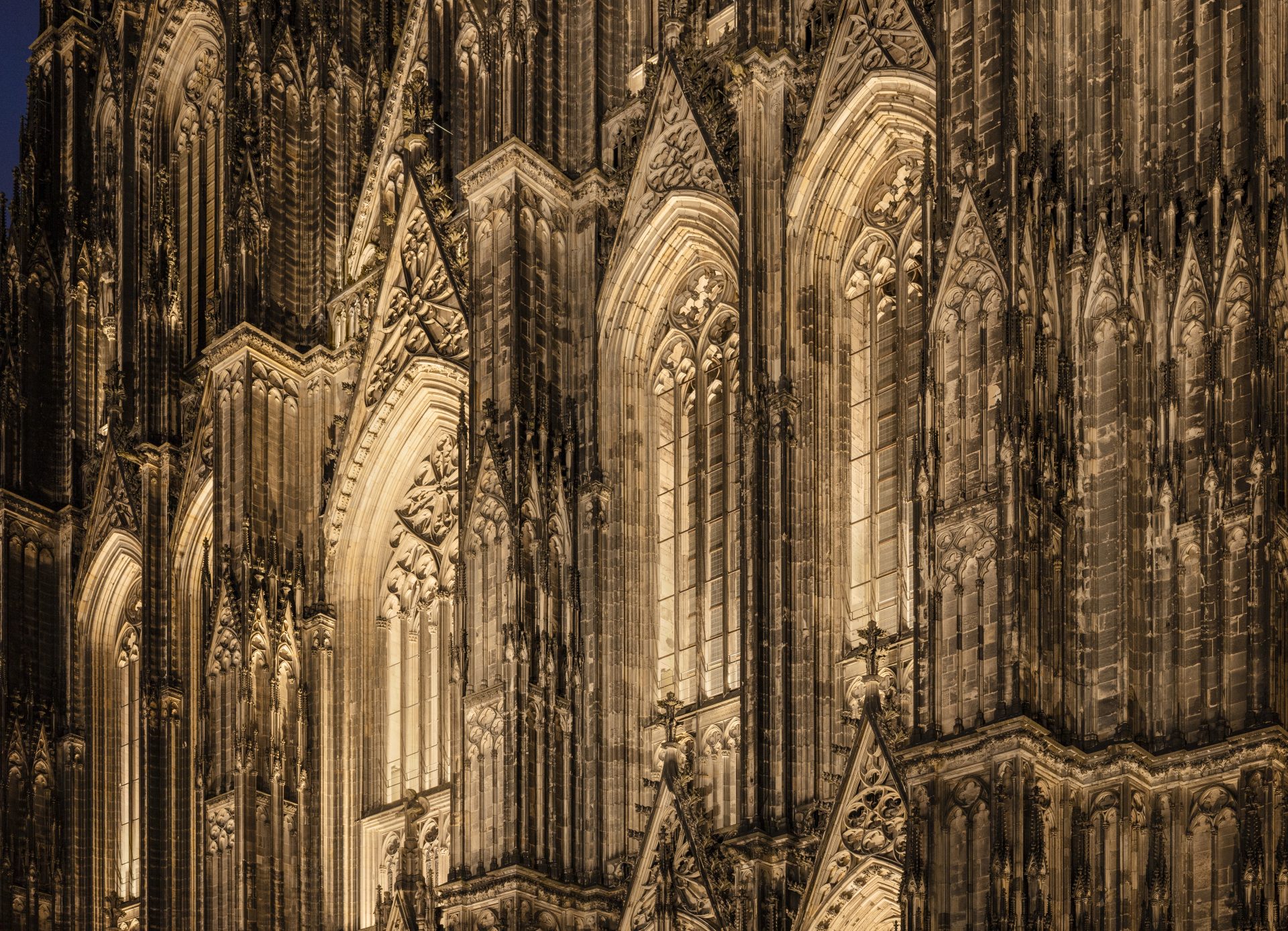
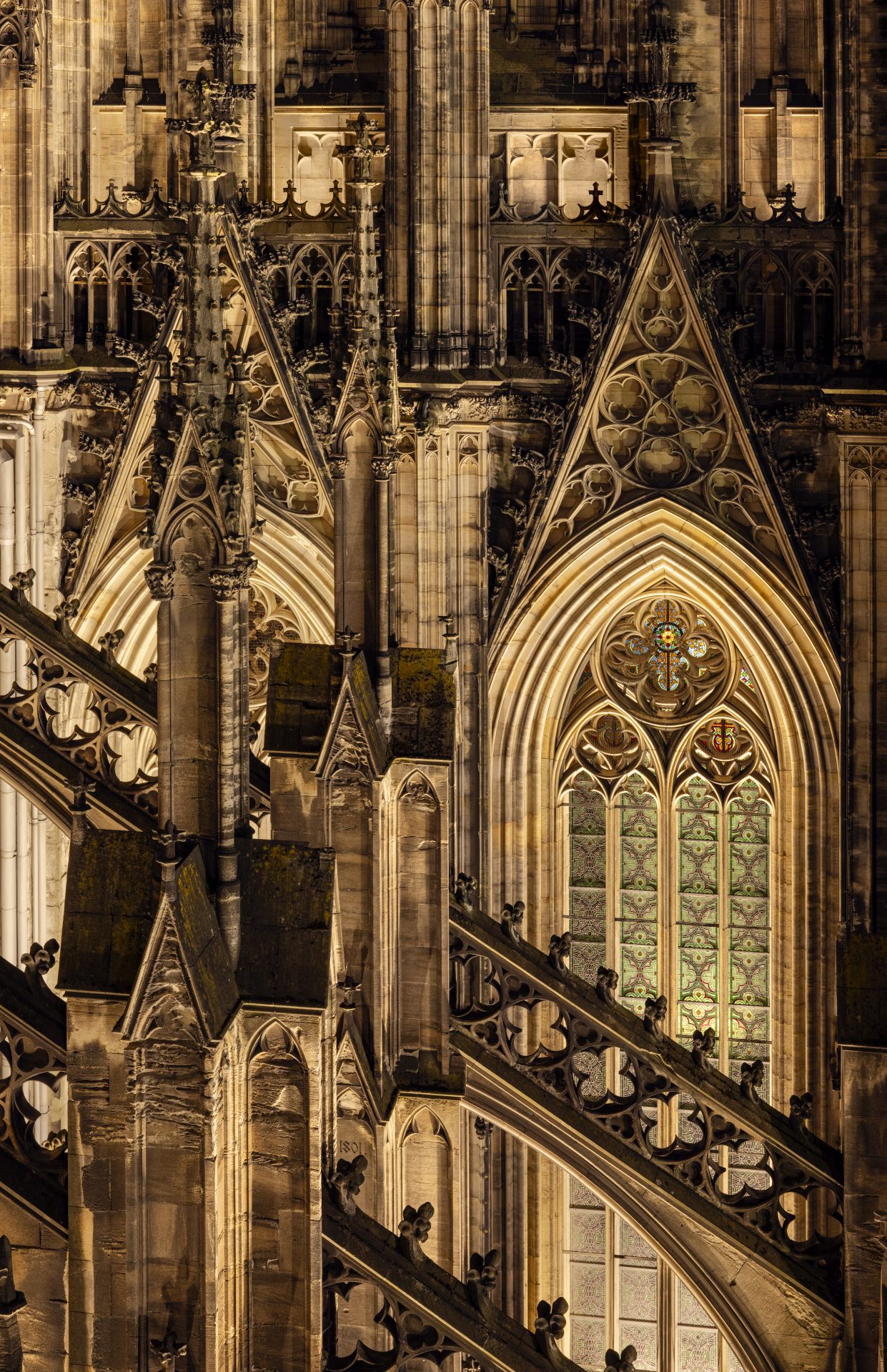
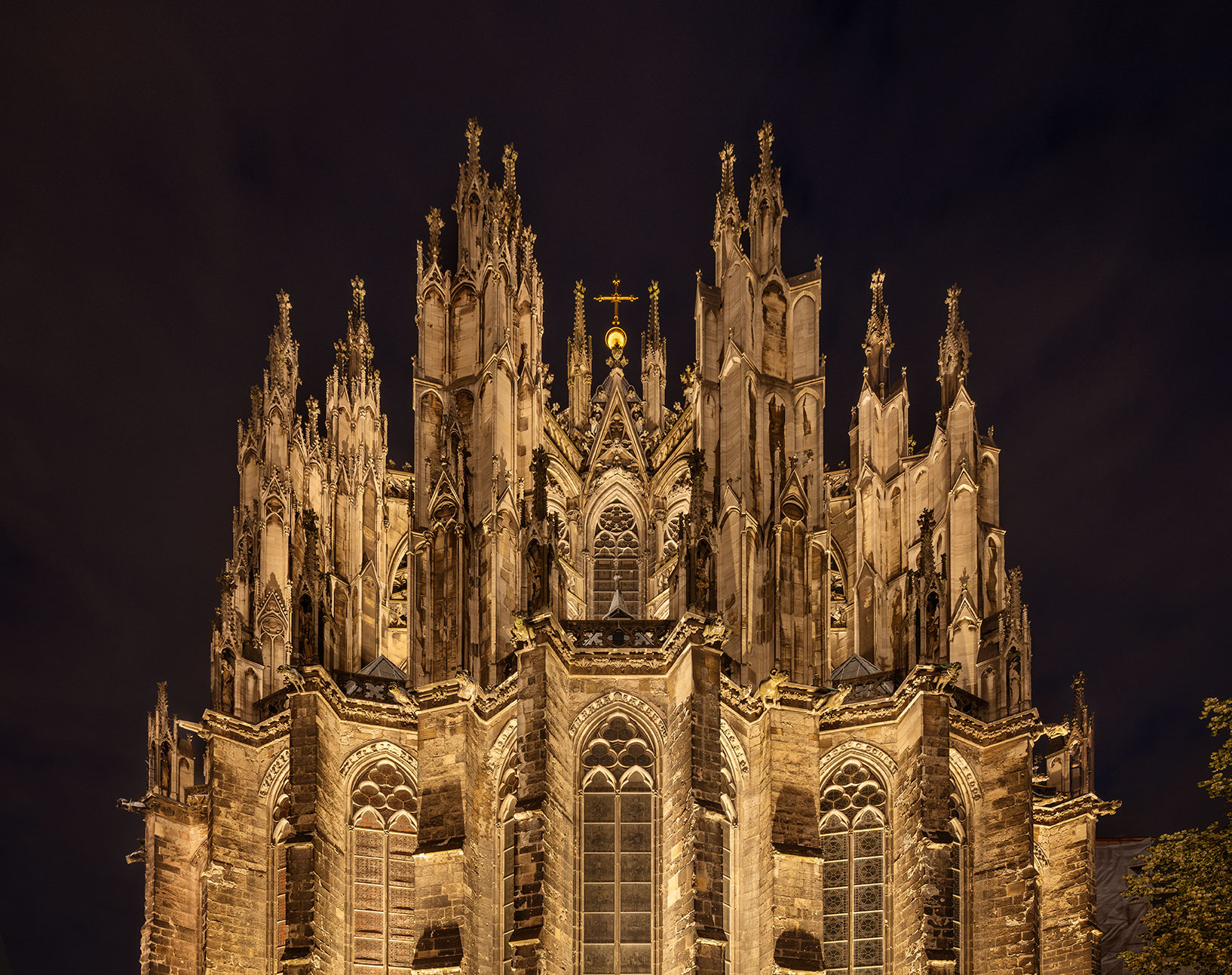
Directional and grazing light, with their interplay of shadows, emphasizes the spatial depth and the soaring verticality of the cathedral’s buttresses, pinnacles, and figures, which converge into its ornate facade. Special attention is also placed on the iconic 157-meter towers. Gentle backlighting combined with vertical grazing light traces the striking contours of the structure up to the spires. A new approach is the lighting installed inside the towers, which shines through the delicate Gothic tracery and establishes the cathedral as an steadfast beacon in Cologne’s nighttime cityscape.

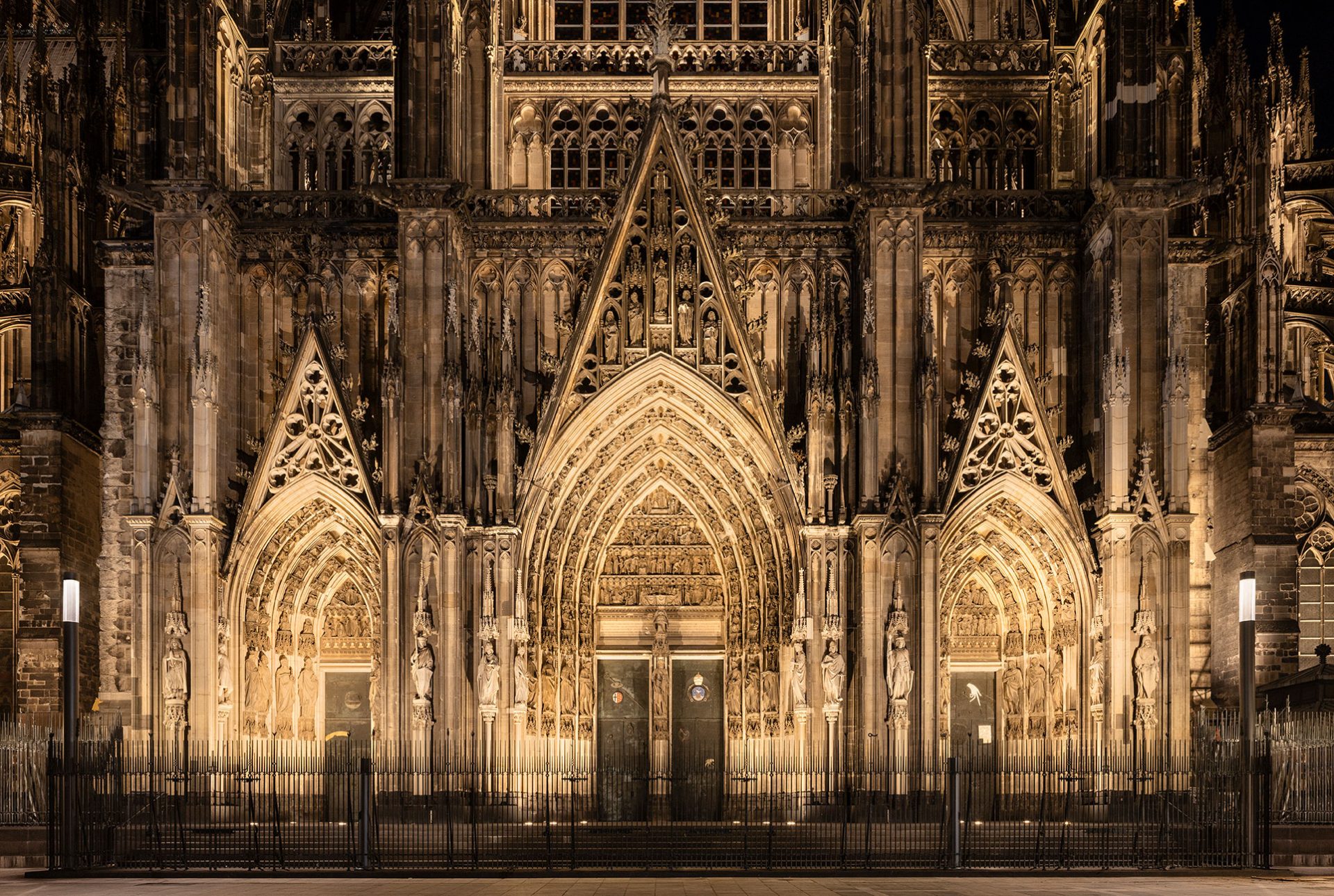
For the installation on the cathedral plaza, all stakeholders collaborated on the development of multifunctional lighting poles. These minimalist stainless-steel pylons blend discreetly into the urban landscape. For orientation, integrated glare-free lighting modules illuminate the areas directly in front of entrances and the cathedral portals, while additional spotlights highlight selected facade elements. All light sources are shielded in such a way to prevent glare and preserve key sightlines.

“The Cologne Cathedral is a landmark of the city and deeply embedded in its identity. Our goal was to preserve its visual presence after nightfall and to make its architectural richness visible even from afar. We’re proud that the result now reveals the cathedral’s form and detail, even from the opposite side of the Rhine—giving it a sculptural, dignified nighttime presence that does justice to its significance,” recalls Philipp Schmitz. It has even been said that the cathedral now looks better at night than during the day.

Licht Kunst Licht AG